
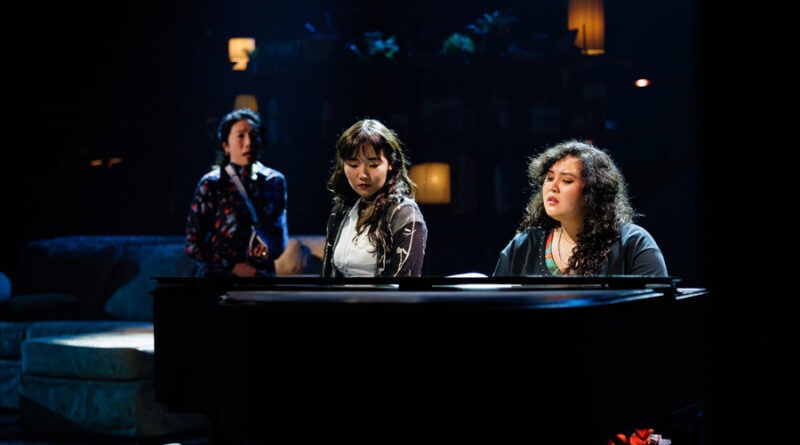
Finding a Voice: The Family Album Turns One Woman’s Story into a Universal Musical
By Cesar A Reyes
Sometimes the stories we’re told are “too personal” become the ones audiences need most. That was certainly the case for The Family Album, the new original musical making its world premiere at La Jolla Playhouse. Inspired by the life of songwriter MILCK (Connie K. Lim), the production explores family, identity, generational trauma, and healing through a contemporary score that began as an intimate collection of songs. Over the past five years, MILCK, co-composer and lyricist Adrianne Gonzalez (AG), book writer Sam Chanse, director Jess McLeod, and Artistic Producing Director Eric Keen-Louie have shaped those songs into a deeply personal story that ultimately became something much larger than any one person’s experience.
Ironically, the musical exists because someone once told MILCK her music wasn’t universal enough. After she and Gonzalez completed The Family Album EP, featuring the emotional ballad “Oh, Mother,” her record label dismissed the project, saying it was too specific to connect with a broad audience. “I knew ‘Oh, Mother’ was a strong song,” MILCK recalls. “I was perplexed why this album wasn’t working in the context of a major label.” Rather than shelving the material, she continued to believe in the songs, and that belief was reinforced when musician Jason Mraz invited her to participate in a community arts project. Young dancers created a piece inspired by “Oh, Mother,” following the lives of a mother and daughter while MILCK performed live. Watching the story unfold in front of an audience completely changed her perspective. “After the show, I thought, ‘Oh, I think this song could be for theatre.'”
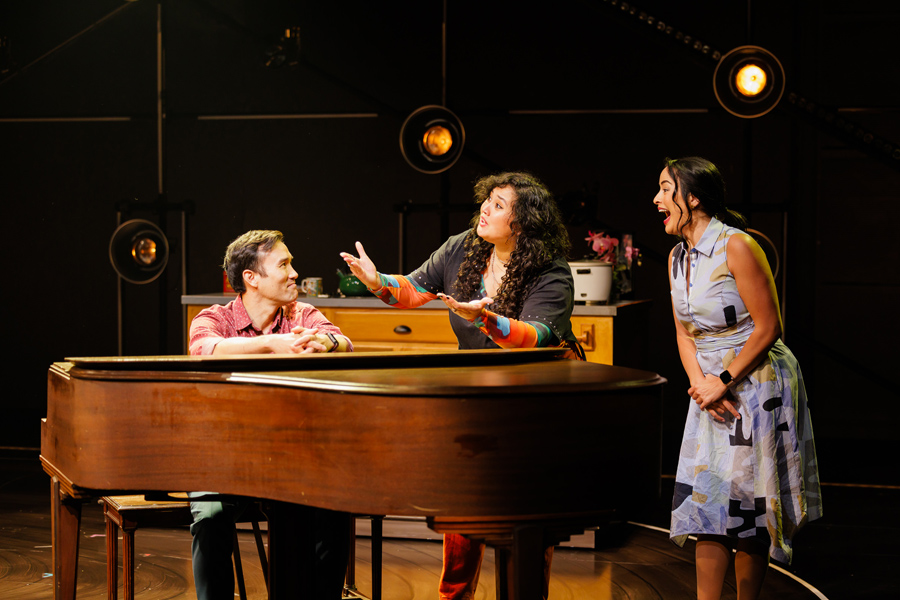
There was just one problem—she had no idea how to write a musical. That changed after fellow artist Ari Afsar introduced her to director Jess McLeod, who immediately recognized the theatrical potential hidden within the songs. McLeod flew to Boulder to work with MILCK, introducing her not only to the mechanics of musical theatre but to Stephen Sondheim’s Finishing the Hat, encouraging her to look beyond individual songs and begin thinking about story. “Jess said, ‘Look at “Oh, Mother” and birth new songs from it,'” MILCK explains. Songs like “Show Up” and “Restless,” both still featured in the production, grew directly from that creative exercise.
For McLeod, bringing the project to La Jolla Playhouse felt like the natural next step. She and Eric Keen-Louie had spent years talking about the lack of musicals centered on Asian American families, and when she shared MILCK’s music, he immediately recognized its potential. “We heard the music, and it was a complete no-brainer,” Keen-Louie says. Former Artistic Director Christopher Ashley quickly agreed, giving the team the opportunity to develop what would become a full-scale world premiere. That decision also brought playwright Sam Chanse into the collaboration, completing the creative team responsible for turning an album into a theatrical experience.
“When we started writing together, there was this core set of beautiful, foundational songs that Connie and AG had already written that set the tone in such a powerful way,” Chanse says. “From there, the piece took on a life of its own.” While five songs from the original EP remain in the show, another twenty or so were created throughout development as the story evolved. Rather than writing dialogue first and songs later, the team built both simultaneously, allowing each scene to naturally flow into music. “Working with Sam has been a very integrated process,” MILCK says. “We build out scenes and songs at the same time, ensuring a very intimate connection between dialogue and lyrics.” Chanse credits that openness for creating a richer, more emotionally honest piece. “We were always inspiring and challenging one another,” she says. “I think that led to a more honest, grounded, multidimensional, and alive piece.”
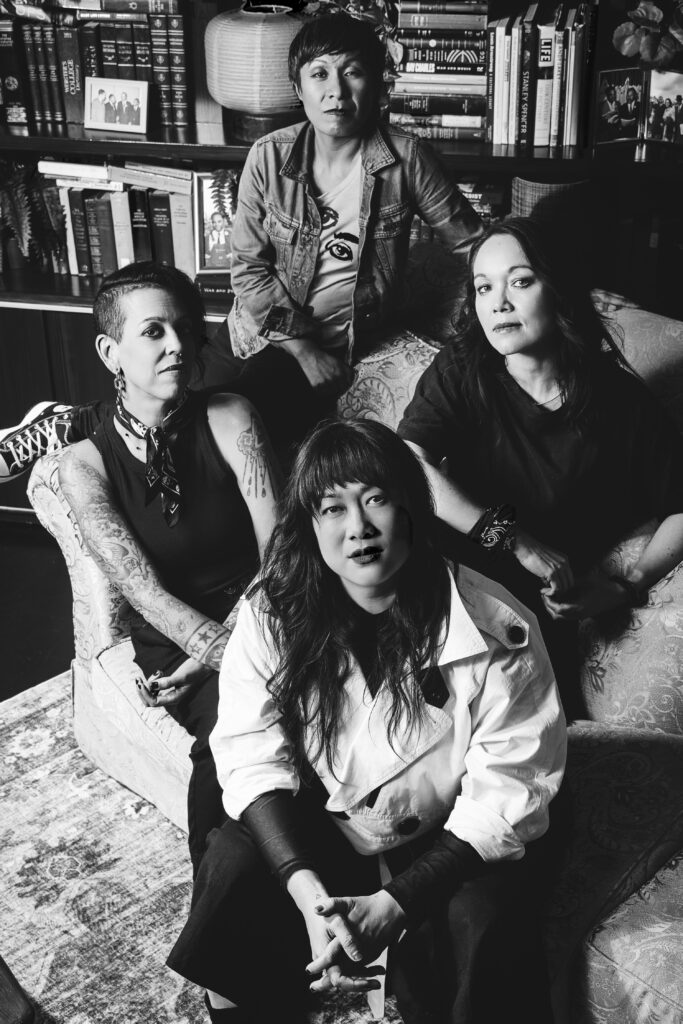
Although the musical is inspired by MILCK’s family, every member of the creative team found pieces of themselves within the story. “The Family Album is an original musical inspired by Connie’s story,” McLeod explains, “but it weaves in elements of all our stories.” Chanse agrees, saying each collaborator brought their own family history, humor, grief, trauma, and life experiences into the rehearsal room. “There was a real sense of holding one another through the process,” she says. “I think all of that is part of the DNA of the musical.” That shared vulnerability gives the production an authenticity that audiences can feel, transforming one family’s story into something universally recognizable.
One of the musical’s emotional high points comes with the song “Quiet,” which already has a remarkable history of its own. Long before The Family Album reached the stage, “Quiet” became an international anthem after a viral performance during the 2017 Women’s March. Its origins, however, are deeply personal. While in therapy, MILCK began confronting childhood trauma and the realization that the pain she experienced wasn’t her fault. “I started having dreams where my 14-year-old self was reclaiming power,” she remembers. “I said three things I’d never said before: ‘This isn’t right,’ ‘I need help,’ and ‘I can’t keep quiet.'” When she shared the dream with Gonzalez, inspiration struck immediately. “She said, ‘Oh, that’s the chorus of your song.'” The pair wrote “Quiet” in just a few hours. “It was this magical moment that just flowed through,” MILCK says. “When that happened, the lump in my throat that I had held in my body all those years just started dissipating.”
Neither songwriter could have predicted what happened next. During the Women’s March in Washington, D.C., MILCK gathered 25 strangers to sing “Quiet” in the streets. Someone recorded the impromptu performance, and within two days it had been viewed more than eight million times, quickly becoming known as the unofficial anthem of the march. “There were all these different choirs,” Gonzalez recalls. “Groups of people started singing it all over the world. There was a 1,500-person choir in Ghana. It was pretty insane.” The song’s journey from a therapy breakthrough to a global movement reinforced the very lesson the record label had missed years earlier: that the more personal a story becomes, the more universal it often feels.
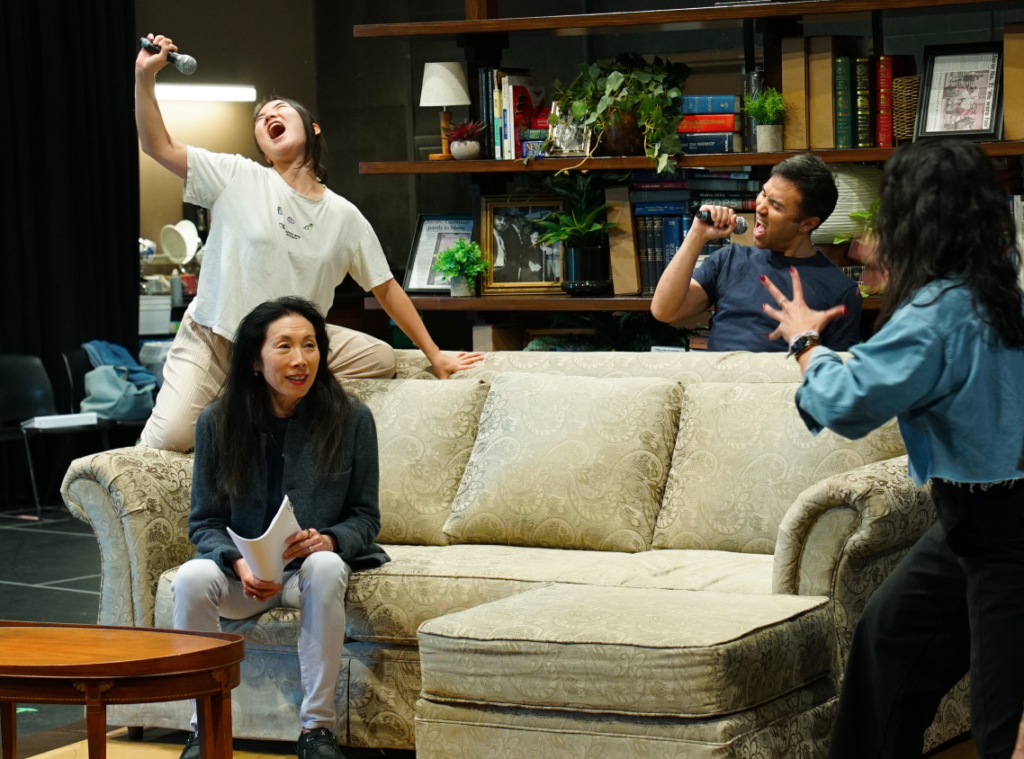
As rehearsals begin for the world premiere, the creative team hopes audiences leave feeling seen, regardless of their background. “We hope it’ll resonate—that audiences will connect to it and recognize something of themselves in the characters and their journey,” Chanse says. “There’s pain and struggle, but also a lot of joy and laughter.” For MILCK, that sense of connection became even more meaningful as anti-Asian hate crimes rose during the show’s development. “It just made us more determined to continue our mission of creating a story that humanizes us,” she says. “So if someone looks at an Asian elder in the street, they don’t just see them as a stereotype, but as a full human being.”
That message extends well beyond the Asian American experience. Gonzalez, who jokingly refers to herself as “the token not-Asian” on the creative team, says she immediately recognized herself in the family at the center of the musical. “Even though this story is very specifically about an Asian American family, I still see myself in it,” she says. “That’s what I want for everybody that watches this show, because that brings us all closer together.” McLeod hopes the production also expands opportunities for Asian performers by creating characters who are fully realized instead of built around stereotypes. “To be creating nuanced, messy, struggling, fully human musical theatre roles for and with an all-Asian cast is gorgeous and transformative,” she says.
Ultimately, The Family Album is about much more than one family’s history. It is about memory, resilience, forgiveness, and the complicated relationships that shape us. Born from songs one record label considered too personal, it has evolved into a musical that reminds us the stories we most fear sharing are often the ones that connect us most deeply with one another.