

Joe Fejeran Honor with Spirit of Stonewall Community Service Award for His Commitment to Visibility and Community Care
By Cesar A Reyes
Joe Fejeran didn’t grow up seeing many openly queer people living loud, public, unguarded lives. Born and raised on the island of Guam and later moving to San Diego at 15, he learned early on how people had to edit themselves just to move safely through the world. Now a podcaster and community volunteer, he carries that memory into everything he does as a reminder of why visibility matters in the first place. That throughline is part of what makes him this year’s Community Service Spirit of Stonewall Award honoree.
“I’m so humbled to receive this award from San Diego Pride,” he shares. “Growing up, I didn’t know many openly gay people. Openly being the keyword, because I knew many gay people, but no one felt comfortable celebrating their queerness.” He pauses on that idea of “celebrating,” because that’s the shift he’s spent years trying to help others believe is possible. For so many people around him back then, blending in was both a habit and survival. “Blending in and not standing out is what they wanted, perhaps for their own safety,” he explains. And so visibility, for Fejeran, is personal. It’s something he wishes someone demonstrated to him sooner.
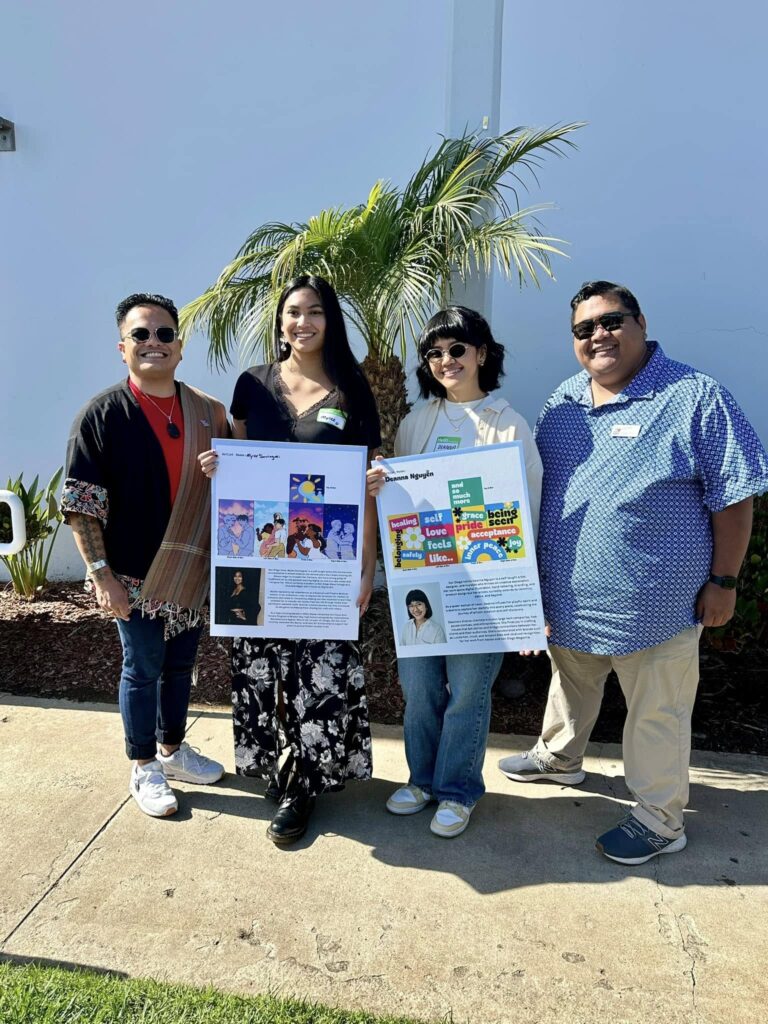
That sense of absence is also what fuels how he understands Pride itself. Not as a single image of parades and glitter and sound systems, but as something layered, sometimes contradictory, and deeply necessary. “All queer people have a relationship to the concept of ‘pride,’” he states. “Some know Pride only for the fun and fabulous flash of the parade and festival. Others know Pride for its community programs and advocacy. Both are equally important.” For Fejeran, those layers aren’t in tension, but are what make Pride whole. The celebration and the work exist in the same breath.
His own relationship to Pride changed the first time he went. He wasn’t out yet, just a college student standing on the edge of something he didn’t yet have language for. He told his straight best friend he’d never been to Pride, not knowing what would come next. A few days later, that friend showed up with a surprise: “We’re going to Pride.” They made it for the last hour of the parade, following the giant rainbow flag as it stretched through the streets into the festival. “It was the first time I didn’t feel like I was hiding in plain sight,” Fejeran says. “I was just one of the hundreds celebrating authentically.”
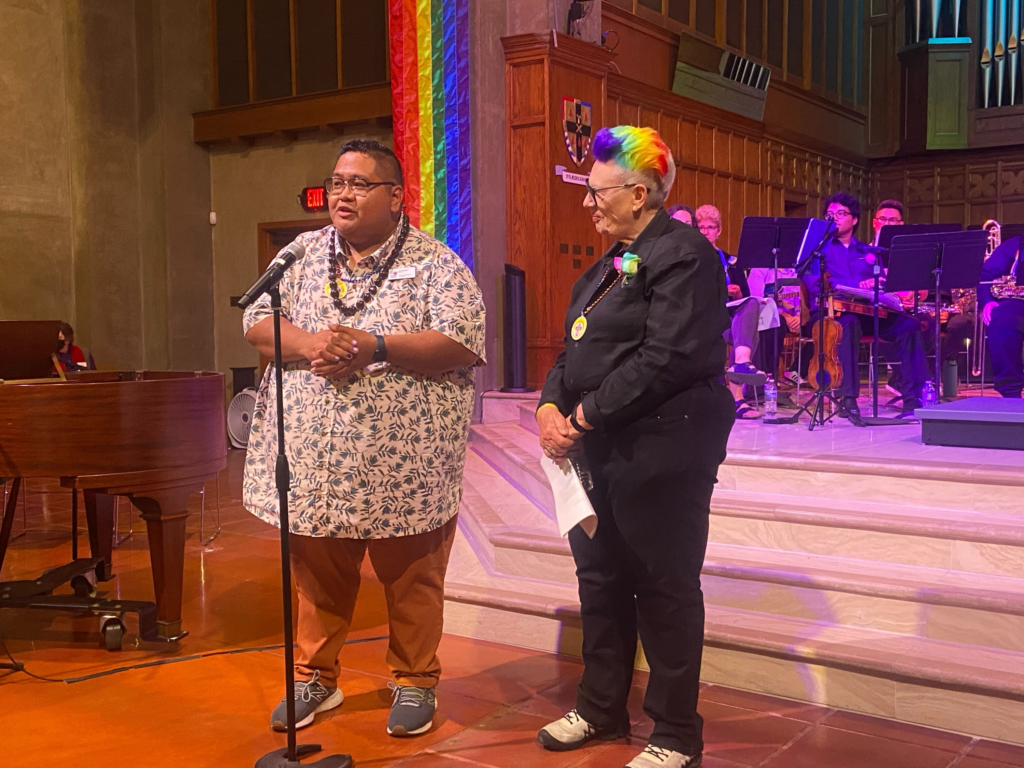
Years later, when he came out to his parents, Pride looked different again, this time marked by rain. But he still went. “I wasn’t going to let weather stop me from finally being out and proud at Pride,” he laughs. It’s a detail that sticks because it isn’t polished or symbolic in the usual way. It’s just real: a person showing up anyway.
Now, Pride week for Fejeran is a mix of large, collective moments and smaller, treasured traditions. He looks forward to Light Up the Cathedral, which he calls his favorite way to begin the week as shared gathering that feels both reflective and celebratory. But he’s just as committed to the intimate spaces that friends create around the chaos of Pride. “My close friends also throw an annual caftan brunch on Pride Sunday, which is the highlight of the weekend,” he says. It’s in those moments surrounded by chosen family, laughter, and something as simple as brunch that the idea of community takes on its clearest shape.

When asked to sum up his work in a single word, he doesn’t hesitate. “The WORD is Service.” Service as showing up, telling stories, and making space for someone else to feel seen a little sooner than he did.