

Fellow Travelers at San Diego Opera: Andy Acosta on Queer History, Visibility, and the Present Tense
By Cesar A Reyes
Andy Acosta doesn’t remember Fellow Travelers arriving in his life so much as it resurfacing at different points, a story that kept finding its way back to him until he finally had to answer it. Nearly a decade ago, while working with Minnesota Opera, he was handed the score during the earliest life of the piece, before it had even premiered. There was no guarantee it would become what it is now, no sense of the impact it would eventually carry. Still, something about it caught him immediately and didn’t let go. “When I read through the score I could not put it down until I finished it,” he says. “The story is so captivating and devastating. These characters are complex, fully realized people.” That first encounter wasn’t just curiosity — it was recognition. Years later, when he finally stepped into the role of Timothy Laughlin, it felt like returning to something that had been waiting for him.
That sense of return sits underneath much of Acosta’s artistic journey, which began in an unexpectedly public way when he was just 14 years old and won the Spanish television competition Minuto de Fama. It was an early brush with visibility that could have easily pulled him in a different direction, but instead it became the first chapter in a much longer, more deliberate story of becoming an artist. Formal training at Florida State University gave that early promise structure, where voice teacher David Okerlund helped build the technical foundation of his instrument and Douglas Fisher opened doors to performance opportunities that pushed him beyond the safety of the classroom. One of those moments came at just 19, when he sang Sam Kaplan in Street Scene on a main stage. “That lit a flame in me to be a storyteller,” he recalls. It was the moment singing stopped being just performance and became a way of carrying human experience.
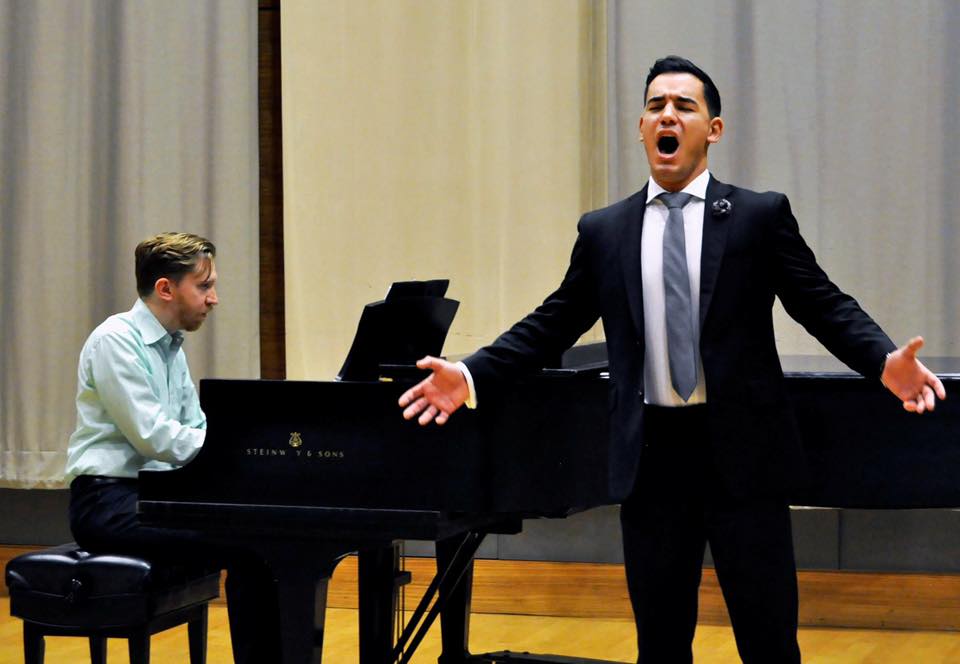
Graduate studies at Indiana University deepened that commitment. There, he performed Arcadio in Florencia en el Amazonas, a role that demanded emotional presence as much as vocal precision. Then came the Merola Opera Program with San Francisco Opera, a proving ground for young artists navigating the fragile transition into professional life. Each step added weight to the idea that Acosta was building a voice that could carry across different kinds of stages, cultures, and stories.
But it is Fellow Travelers that seems to circle most insistently through his artistic life. The opera itself, composed by Gregory Spears with a libretto that blends restraint and emotional intensity, tells a story set during the Lavender Scare of the 1950s—a period when queer people in the United States were actively surveilled, persecuted, and driven into silence by government institutions. For Acosta, stepping into Timothy Laughlin’s world is not an abstract historical exercise — it is personal. “I have the privilege of knowing what it feels like to tell this story over the course of 10 years,” he says. “The truth is that it was very frightening when I first stepped into Tim’s shoes. So much of my own coming out story was filled with fear and shame.”
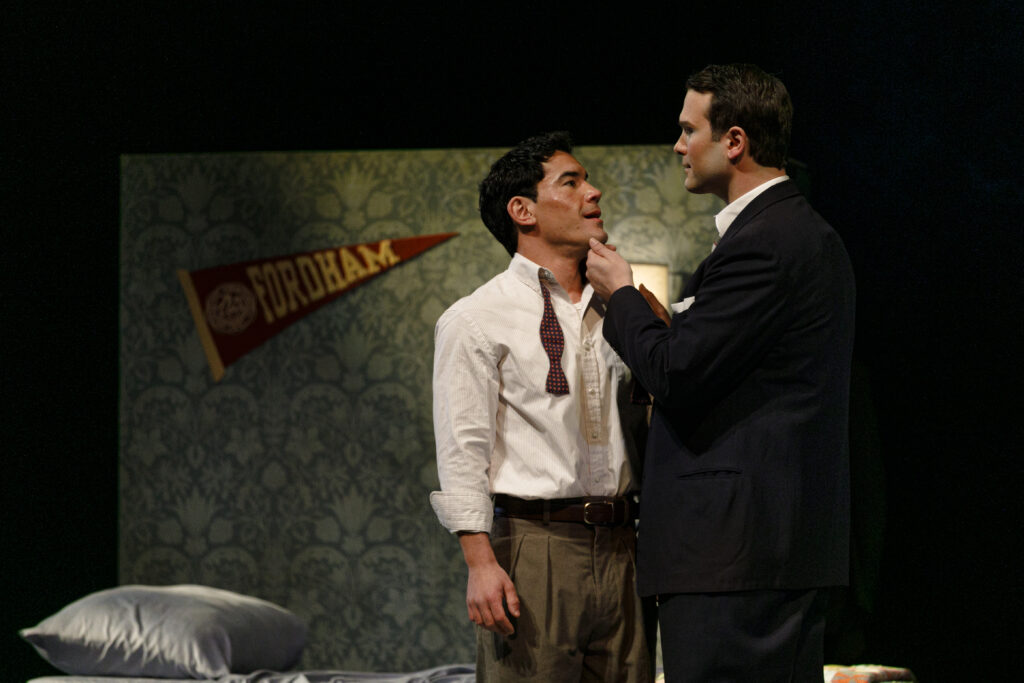
That connection between character and performer gives the opera its emotional charge. Timothy is not simply a figure from history; in Acosta’s interpretation, he becomes a mirror of internal conflict—of desire colliding with fear, and identity being shaped under pressure. “I really don’t want to give away too much,” he adds carefully, “but just know that everyone in the audience will see part of themselves in this story.” It is not a warning or a promise, but something closer to an invitation: to sit with discomfort, recognition, and the pressing questions the work leaves behind.
The Lavender Scare looms over the opera like a shadow that never fully lifts. It’s a historical moment, but also a living echo. Acosta doesn’t frame it as distant history. Instead, he speaks about it with urgency, drawing a line between then and now. “I am able to live a beautiful life as an openly gay, married man because of the history of folks that came before me,” he says. “It is not lost on me that I have a duty to tell this story as authentically and as loudly as possible.” For him, the responsibility is not just artistic, but generational. The story carries weight because it is part of a continuum, one that still demands attention.
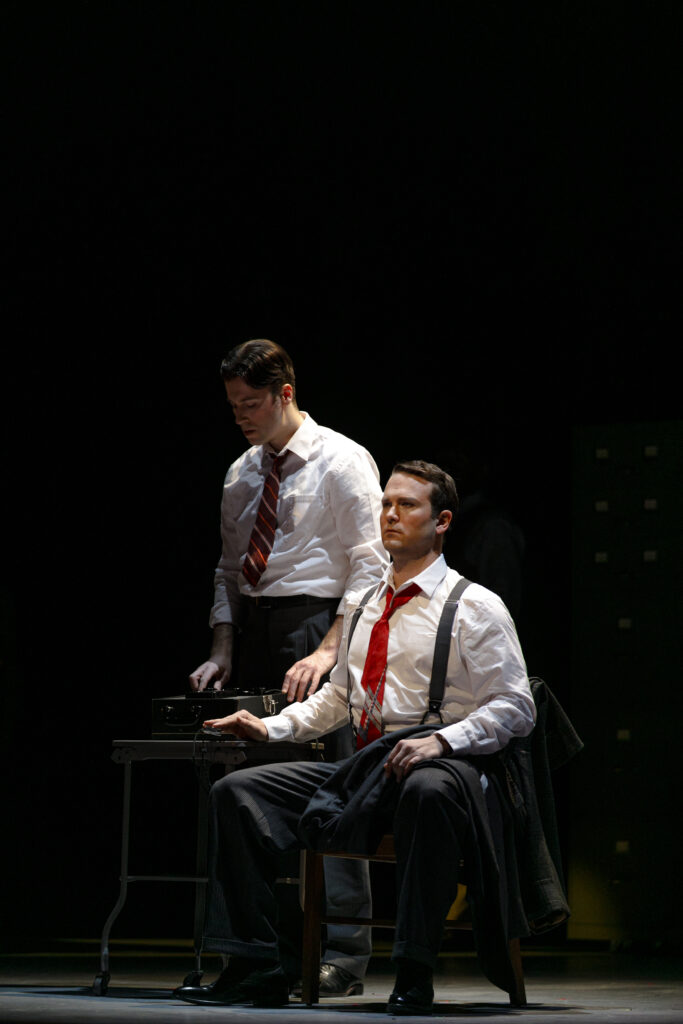
What makes Fellow Travelers especially striking for him is the way it refuses simplicity. Gregory Spears’s score resists easy categorization. Acosta describes it as both structured and deeply expressive. “Gregory Spears is undoubtedly one of the most incredible composers of our time,” he says. “The sonic world of this piece is a mixture of minimalism and troubadour music. It has the structure of Glass but the melismatic expression of Baroque music.” The music becomes part of the drama’s emotional architecture, shaping how memory, desire, and fear unfold onstage.
That sense of emotional architecture resonates strongly in San Diego, where Acosta has built a life that exists comfortably between artistic pursuit and everyday community. While opera remains central to his identity, his day-to-day life is grounded in a different rhythm. He works full-time as a real estate agent, a profession that might seem far removed from opera stages but, for him, is another way of engaging with people’s stories and transitions. “It has led to incredible connections with clients and their networks,” he says. “It keeps me running into familiar faces in all the spaces I frequent.”
San Diego itself plays a quiet but constant role in shaping his creativity. He lives in Bankers Hill with his husband, Josh, and their life together is threaded through the city’s neighborhoods and gathering places. Local coffee shops, dinners in University Heights, visits with friends at Parlor on Fifth—these aren’t just routines, but small anchors of belonging. “We spend a lot of time visiting coffee shops like Mnemonic Coffee or grabbing a bite before we go watch a show at Diversionary Theater,” he says. The city becomes a kind of informal rehearsal space for connection, where everyday encounters feed the emotional reservoir he draws from on stage.
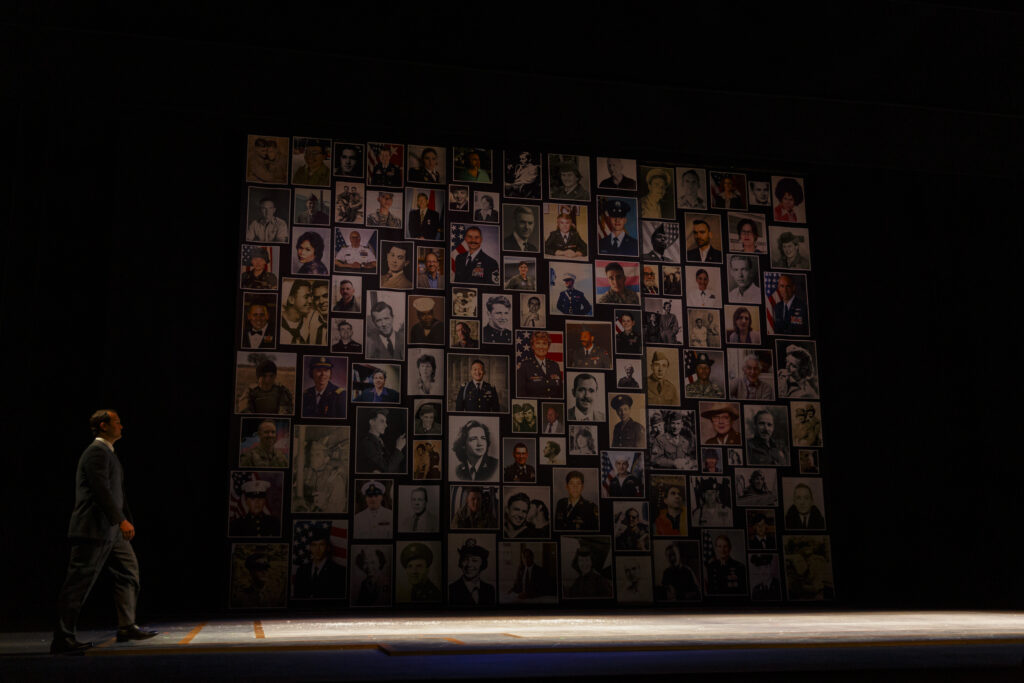
That connection deepens the meaning of presenting Fellow Travelers during Pride season in San Diego. The opera’s themes of visibility, secrecy, and resilience land differently in a city where queer culture is both visible and still evolving. “I am honestly really emotional about presenting this over Pride here in San Diego,” he says. “Not only is it a beautiful telling and celebration of our history, but it is in the city that I call home.” There is something almost circular about it—the story of past persecution being told in a present-day community built on visibility and chosen family.
Still, Acosta resists turning the work into a fixed message. Instead, he leans into its ambiguity, its refusal to instruct the audience on what to feel. “This show does what theater does in its best form,” he explains. “It does not preach a message, but rather asks questions that people can wrestle with themselves.” That openness is part of what keeps him returning to it, decades after first encountering the score.

When he talks about what the role of Timothy has taught him, the answer is layered and evolving and summarized in one word. “The WORD is Challenged,” he says. “Challenged physically to meet the vocal and acting demands of this piece. Challenged to face my own truths. Challenged to stop categorizing people as good or bad, but rather to become curious about the ways we all move through space.” It is not a neat conclusion, but a lived one—shaped by years of returning to the same character and finding new versions of himself inside it.
In San Diego, that sense of challenge doesn’t end when the curtain falls. It continues in the life he has built outside the theater, in the intersections between performance, community, and everyday connection. Fellow Travelers may tell a story rooted in the 1950s, but in Acosta’s hands, it becomes something present-tense—alive in the city streets, in shared spaces, and in the ongoing question of what it means to live openly, fully, and without hesitation.