

Las Hermanas Reclaimed: Betty Bangs Honors Queer Xicanx Ancestors
By Cesar A Reyes
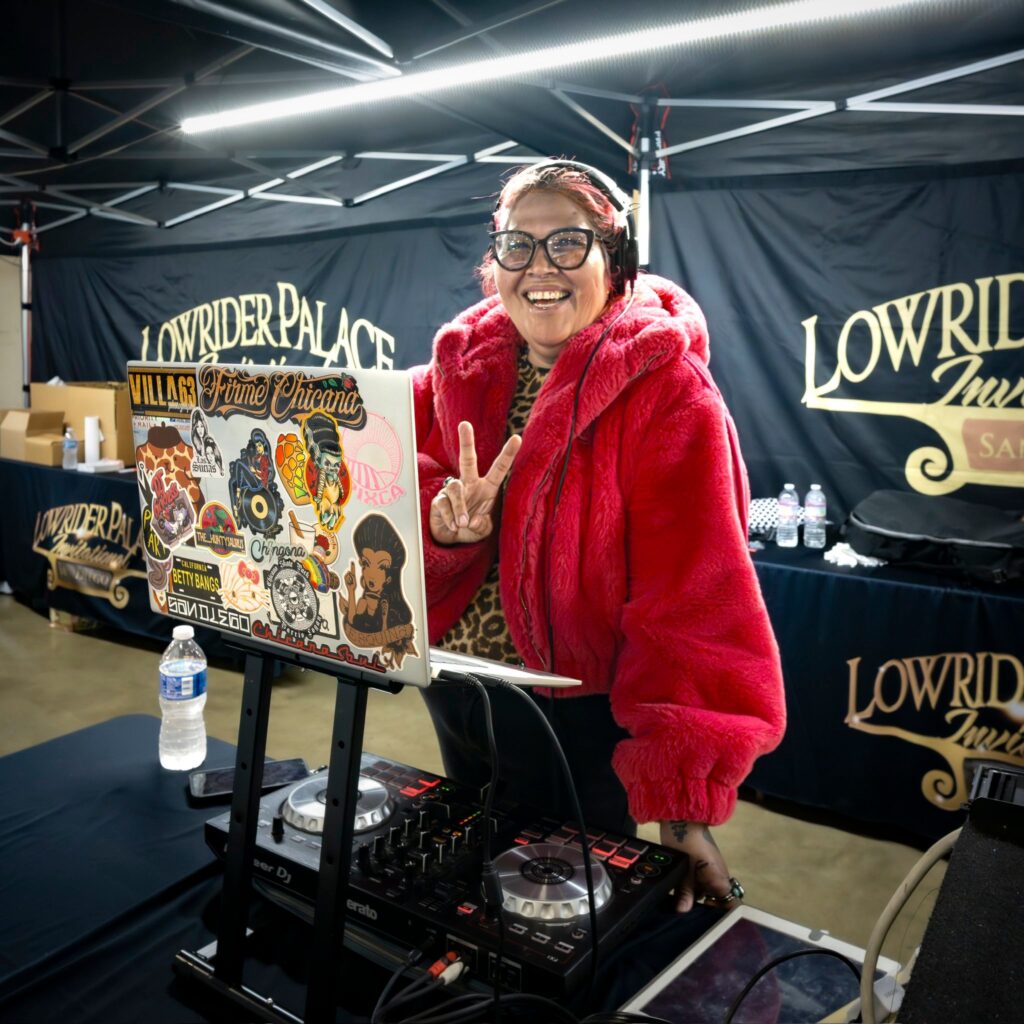
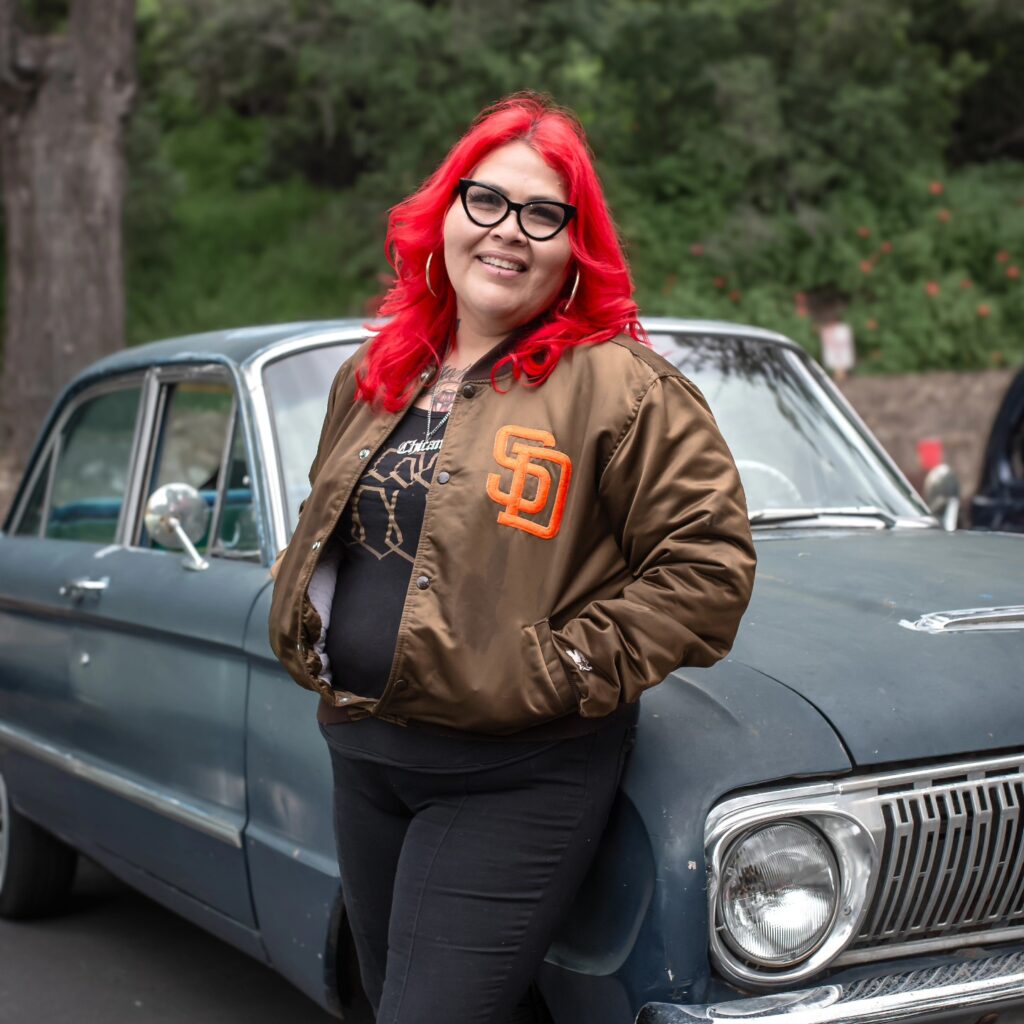
Betty Bangs doesn’t separate art from life. “I’m a Queer Xicanx artist born and raised in San Diego,” she says, grounding everything in that truth. DJ, organizer, advocate for victims of crime—none of these titles sit alone. They move together, like a set being mixed live. “I’ve always been openly who I am,” Betty says. “I bring my art, my culture, my lifestyle into every space.” That presence has made her one of the loudest, most visible Queer Xicanx voices in Barrio Logan—not loud for attention, but loud so others can find their way in.
Her roots in the neighborhood run deep. Long before gallery openings and DJ lineups, there was family. “My mom had a business on Logan Avenue in the ’70s—Sentinels Draperies,” Betty shares. It was a time when the land that would become Chicano Park was being fought for and reclaimed. That history never left. As a teenager, she was pulled back by the murals, the lowrider culture, the feeling that something sacred lived in those streets. “Chicano Park drew me back,” she says. “That’s where I come from.” Now, years later, she’s part of that same living story—DJing in galleries up and down the block, playing Chicano Park Day, showing up again and again for the community that raised her.
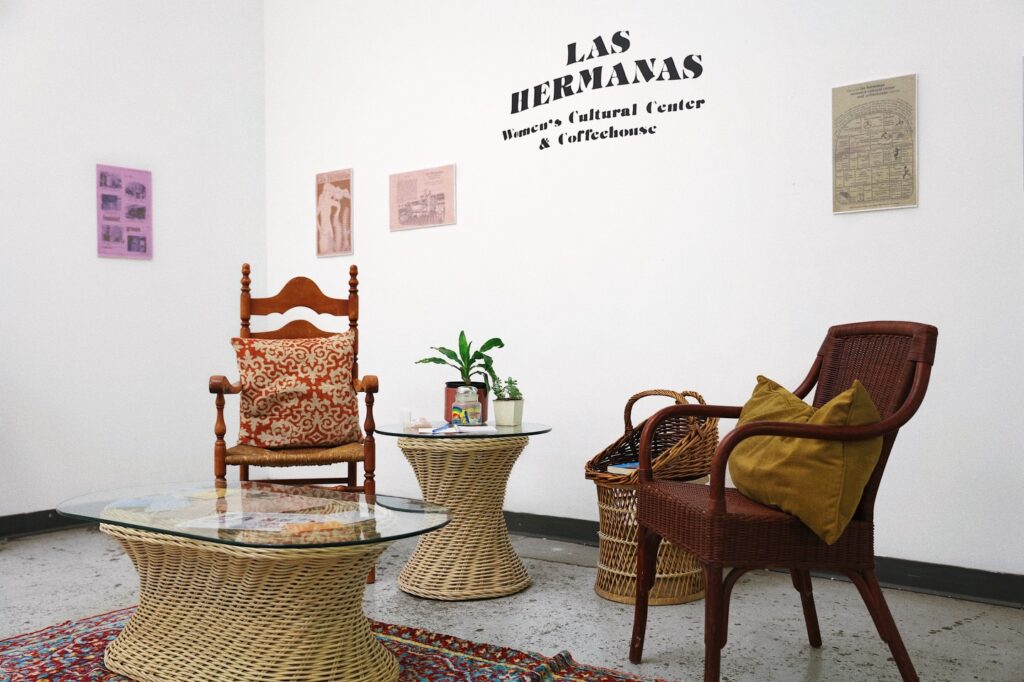
But Betty isn’t interested in nostalgia alone. What matters is what gets built now—and who gets included. “As an artist, your art is your voice,” she says. “If they don’t give us space, we make our own.” That philosophy lives inside her work at The Woo, where the current Las Hermanas Archive exhibit has become a portal.
The exhibit started with something small—a calendar picked up at Lambda Archives. “I brought it back and was like, ‘Look at this… there was a Queer Xicanx space here?’” Betty recalls. That moment cracked something open. Alongside collaborators, she began digging—old flyers, photos, T-shirts, fragments of a history that had been there all along but rarely centered. “We geeked out,” she laughs. “Like, wait… there were more of us?”
What they found was Las Hermanas, a space where Queer Xicanx women carved out community, culture, and resistance. For Betty, it was both affirming and disorienting. “I didn’t even know this existed,” she admits. “And it makes you think—how different would life have been if we did?” That question became fuel. Because if it could be forgotten once, it could be forgotten again.
“That’s why archiving matters,” Betty says. “It shows we were here.” The exhibit doesn’t just display history—it insists on it. Every recreated T-shirt, every calendar entry, every photo is proof. “If we don’t do it, the man will erase us. And that’s not acceptable.” There’s urgency in her voice, but also care. This is about preserving the past for survival, recognition, and giving future generations something to hold onto.
Betty sees that lineage everywhere, even in small, unexpected moments. She recalls meeting an older butch woman named Anna who checked someone’s disrespect with a cutting truth: “You’re only able to be like that because I did this before you.” It stayed with her. “That hit me,” Betty says. “We don’t always know who came before us or what they went through.” That’s what this work is about—making sure we do.
In Barrio Logan, Betty sees a shift—Queer Xicanx leadership becoming more visible, more undeniable. “These mujeres are running things,” she says, pointing to leaders like Monica Hernandez. “And they don’t forget where they come from. They bring people with them.” That kind of leadership, rooted in community, changes what’s possible. It shows younger generations that there is space for them—not somewhere else, but right here.
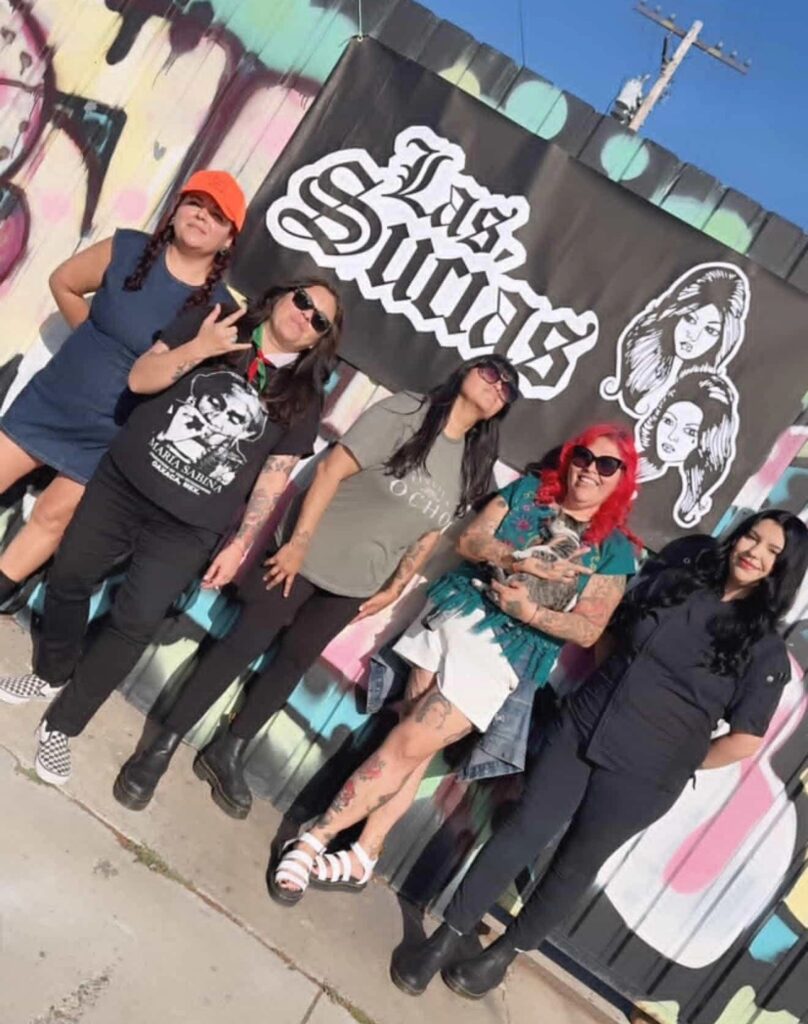
Ask Betty if Barrio Logan is a safe space, and she doesn’t hesitate. “I feel safe here,” she says simply. “I’ve never had a problem being queer in my community.” For her, the narrative isn’t about creating safety from scratch—it’s about recognizing what has always existed and making it more visible. “If you didn’t know, now you know,” she adds.
At The Woo, that visibility is alive. The Las Hermanas exhibit runs through June, with workshops, community nights, and recreated gatherings inspired by the original space. It’s not just something to look at—it’s something to step into. “Come through,” Betty says. “Be part of it.”
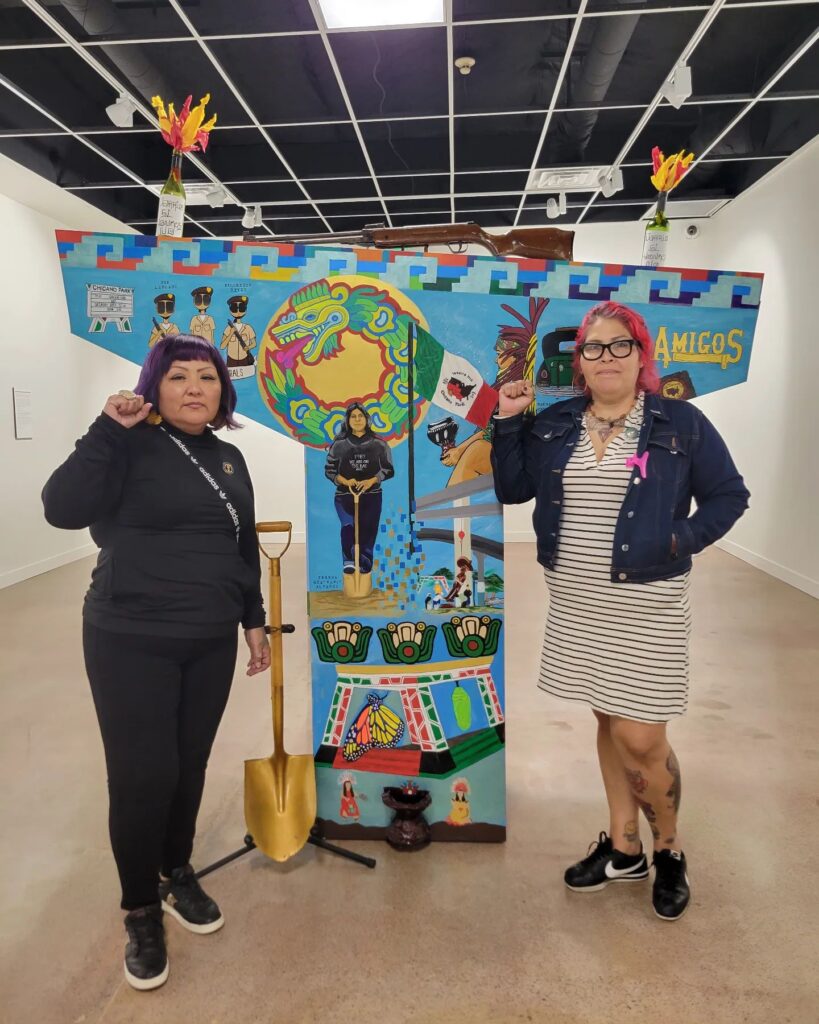
Because in the end, everything comes back to that one truth she carries with her: “La cultura cura.” Your culture heals you. And for Betty Bangs, that healing is collective, ongoing, and impossible to erase.
Pingback: Queer Xicanx Leaders Shaping Culture, Space, and Survival in Barrio Logan - The Word SD