
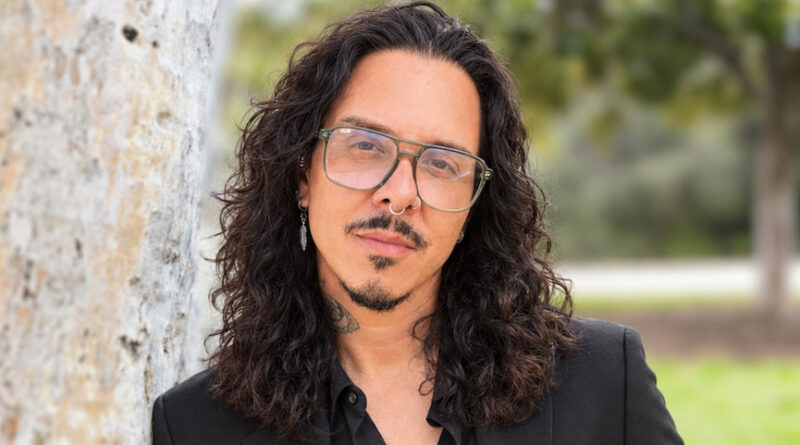
Author Peter Cervantes Turning Life Around and Finding a Purpose
By Zach Shattuck
Ten years ago, if you had asked Peter Cervantes about becoming a recovery coach for his community, he would have laughed in your face.
“Never in a hundred years,” he would have derided.
That imaginary conversation would have taken place just a few years before Cervantes found himself in the hospital, his body turning on him for no medically apparent reason.
But his partner knew what was going on, and deep down Cervantes did too.
At the time, Cervantes was a man struggling with being defensive, avoidant, and self-destructive, though he appeared happy on the surface. In reality, he was sad and angry all of the time, with self-loathing as a constant companion. The life he was living up until thirty-seven was built on years and layers of defense mechanisms which began forming in his childhood. While his abuelito was a cherished sanctuary for his first few years, most of his growing up involved punishment for authenticity and vulnerability.
“I learned to edit myself before I even understood what I was hiding,” Cervantes explains. “As a queer Mexican-American man, I learned early how to read a room, make other people comfortable, and hide the parts of myself that might be rejected.”
These beliefs developed in childhood were reified when Cervantes was disowned as a young man with his father learning he was gay.
Cervantes spent his twenties and most of his thirties running from his life experiences, often relying on substance abuse to cope. There was almost nothing that could make Cervantes turn within to examine the hurts he had built himself on. Everything he did, from outbursts to self-sabotage to more than one attempt to end his life, centered around the unaddressed trauma from his childhood and early adulthood.
But eventually, Cervantes was forced to face change.
Between his heart acting up at the too-young age of 37, and the love of his life presenting the ultimatum of “seek help or loose me too,” Cervantes dived head-first into both therapies and individual healing work to find the self he had abandoned and return to who he is today.
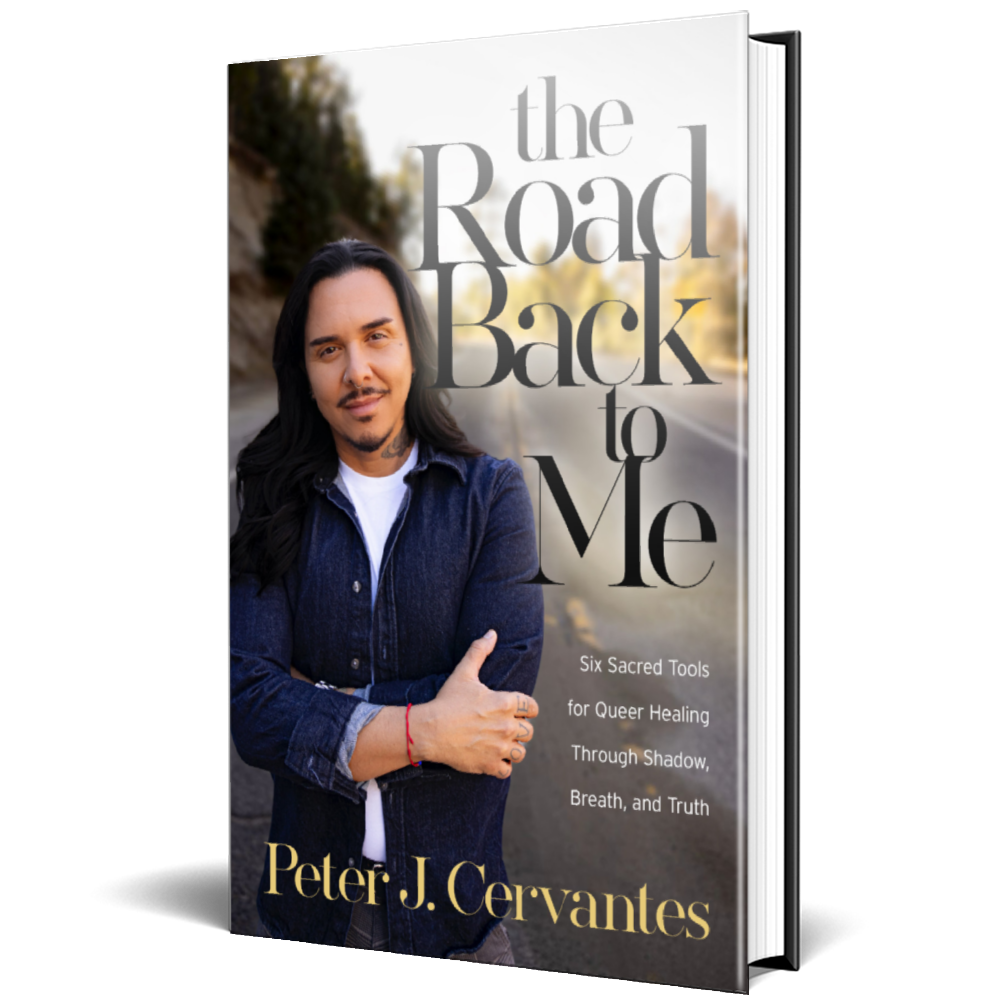
His first book The Road Back to Me: Six Sacred Tools for Queer Healing Through Shadow, Breath, and Truth is both a documentation of his seven year healing journey and a how-to guide for those who are seeking to change their own lives to find their authentic selves through healing and shadow work.
While the term shadow work has become a buzzword, Cervantes maintains its reality is a critical aspect of the healing process.
Cervantes, like many survivors of trauma, disconnected from certain parts of himself because hiding felt safer, a condition of being accepted and loved. Shadow work, he asserts, “is the process of reconnecting with the versions of ourselves we left behind.”
The healing practices Cervantes writes about are the ones he uses to this day. Growth and change truly show through with consistency, and 7 years of consistent work has helped Cervantes shine for who he is.
Cervantes stands now as a warm man with ample patience and joy. “I no longer abandon myself to earn love or approval. Healing gave me the tools to face my life without running from it, and it helped me find purpose in the life I once questioned,” he shares proudly.
Recently, he spoke at The Center’s Latin@x Heritage Night Open house, an experience he describes as “incredibly meaningful.”
“Sharing my story in a bilingual space allowed me to speak not only to queer Latinos but also to families who may be trying to understand, support, and love them more fully,” he elaborates.
One of the most frustrating aspects of his healing journey was feeling like there wasn’t much of a blueprint. Many therapies and guides did not seem to be able to address the intersection Cervantes stood at of being a queer first generation Mexican-American, what he describes as “playing on expert mode.”
So Cervantes wrote a book with the specific intent of supporting other people pursuing their own healing, in particular queer people of color. However, Cervantes maintains this book is for anyone who is looking to heal from their traumas and reconnect with themselves.
“Pain, shame, self-abandonment, and the need to belong are universal,” he explains.
While Cervantes lived in Salt Lake City for a few years, he and his now husband returned to San Diego to be closer to the people they love and be part of a supportive community they could build with. They have been happy to return home, their life together now built on a foundation of vulnerability, healing, and commitment to each other’s authenticity.
“Our relationship has taught me that love should give you room to become more of who you are. Stephen did not heal me; he loved me while I learned how to heal myself,” Cervantes shares. “There is a difference, and it changed my life.”
Now, with their first wedding anniversary right around the corner, Cervantes is excited about his pivot to a career of passion and benefit for his larger community.
“I am now building coaching programs, online resources, bilingual tools, and speaking experiences that will allow this work to reach more people,” he announces. One of those bilingual tools is translating his book into Spanish for wider accessibility. “I want to help people reconnect with who they are, find what they have been searching for within themselves, and strengthen their connection to something greater.”
When asked to share The WORD that best describes his message and story, Cervantes smiles warmly and responds with, “Home.”
“As humans, we’re often taught to look outside ourselves for happiness, acceptance, stability, value, worth, and belonging. I spent much of my life doing exactly that. The more I learned to accept all the parts of myself, the more I realized I wasn’t searching for home anymore. I was coming back to it.”
Cervantes can be found on Instagram and TikTok under the handle @PeterJ.Cervantes or via his website at PeterJCervantes.com.