
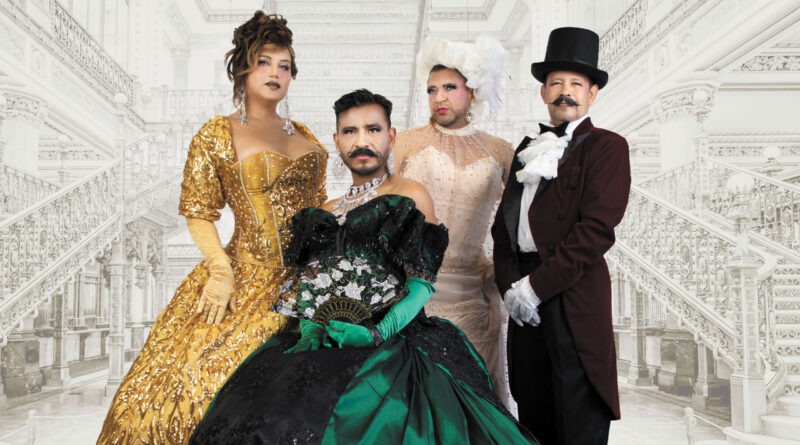
Viva Vivo Reclaiming the Legacy of El Baile de los 41
transforming a painful chapter of LGBTQ+ history into an evening of remembrance, celebration and pride.
By Cesar A Reyes
Some stories are passed down because they are meant to be remembered. Others survive because someone refuses to let them disappear. For Hugo de la Torre, the story of the 41 is both. What began in Mexico City in 1901 as a night of celebration that then ended in public humiliation has traveled across generations, carrying a number that was turned into a slur against gay men. Now, 125 years later, de la Torre and Viva Vivo Binacional are reclaiming that number through El Baile de los 41, transforming a painful chapter of LGBTQ+ history into an evening of remembrance, celebration and pride.
For de la Torre, reclaiming this history is personal, but it is also about the generations who came before and those who are still finding their place in the world today. As president and co-founder of Viva Vivo Binacional, alongside Ramón Sandoval, his work has centered on serving LGBTQ+ Latinos, people living with HIV and immigrant communities in San Diego and Tijuana.
“I am passionate about bringing people together, creating alliances and transforming the needs we see into concrete actions,” de la Torre says.
That philosophy has guided Viva Vivo for nearly 16 years. The organization began not as a large nonprofit with extensive resources, but as a support group for people living with HIV and their families and loved ones. What de la Torre and Sandoval saw was that medical information alone was not enough.
“From the beginning, we understood that many people needed more than medical information,” de la Torre explains. “They needed a place where they could talk without fear, feel heard and know that they were not alone.”
That simple idea became the foundation for Viva Vivo Binacional. Over the years, its work has expanded into HIV prevention, sexual health education, and helping community members connect with healthcare services. The organization guides people toward HIV testing, treatment and continued care, while also providing information about PrEP as a tool for HIV prevention.
Much of the work happens in the spaces between a person and the services they need. Language can be a barrier. So can fear, unfamiliar systems or simply not knowing where to begin.
“Many times the services exist, but people don’t know how to find them, don’t understand the requirements or are afraid to approach institutions,” de la Torre explains. “We listen to their needs, explain the information in their language and help connect them with clinics, organizations and community programs.”
That same spirit of showing up for people extends to Viva Vivo’s work with immigrant communities. The organization provides letters of support for certain immigration matters and accompanies people during some court appearances. It does not replace legal counsel, but it can provide something that is often important during a frightening process: another person standing beside you.
The organization has also created temporary employment opportunities through community events, including positions in food service, bartending, waiting tables, and event support. For people who need income, those opportunities can offer more than immediate financial help; they also provide experience, confidence, and a sense of independence.
Across the border, Viva Vivo has supported shelters and migrant refuges in Tijuana with food, clothing and other basic necessities. Through that work, de la Torre has witnessed the difficult circumstances many migrants face as they try to build new lives. But hardship is only part of what he sees.
He also sees determination.
That perspective is reflected in the way he describes Viva Vivo’s work. The organization, he says, learned early that even the smallest gesture can matter.
“Viva Vivo was not born in an office or with great resources,” he says. “It was born by listening to people and responding with what we had within our reach.”
A bag of clothing. A box of food. An HIV test. A medical referral. A letter of support. Someone simply being there when another person is facing a difficult moment.
“These things can open a door that once seemed closed,” de la Torre says.
Today, Viva Vivo is entering a new chapter. The organization is registered as a nonprofit in California and is awaiting federal approval of its 501(c)(3) status. Christie’s Place is currently serving as its fiscal sponsor. The goal is to build on nearly 16 years of community work and create a stronger foundation for the years ahead.
That makes El Baile de los 41 a milestone as well as a celebration.
The idea for the event grew from a desire to reclaim a piece of LGBTQ+ Mexican history that has long been associated with shame. In November 1901, during the government of Porfirio Díaz, police raided a private gathering in Mexico City. Forty-one people were arrested. Some of the men were reportedly wearing clothing considered feminine at the time. They were publicly ridiculed, humiliated, and punished.
The story has become one of the most recognizable episodes in Mexican LGBTQ+ history. Historical accounts also identify Ignacio de la Torre y Mier, Porfirio Díaz’s son-in-law, as someone believed to have been present. He has often been described as the alleged 42nd participant, with his name reportedly removed from the list to protect the presidential family.
Regardless of whether every detail of the story can be independently established, the number 41 became deeply embedded in Mexican culture as a derogatory reference to homosexuality.
Viva Vivo wants to change that meaning.
In 2026, marking 125 years since the event, El Baile de los 41 will bring that history into a completely different setting: a room filled with community, music, celebration, and pride.

“We decided to recover that number and give it a new meaning,” de la Torre says. “What was once used to point at, persecute and humiliate people, today we transform into memory, dignity, visibility and pride.”
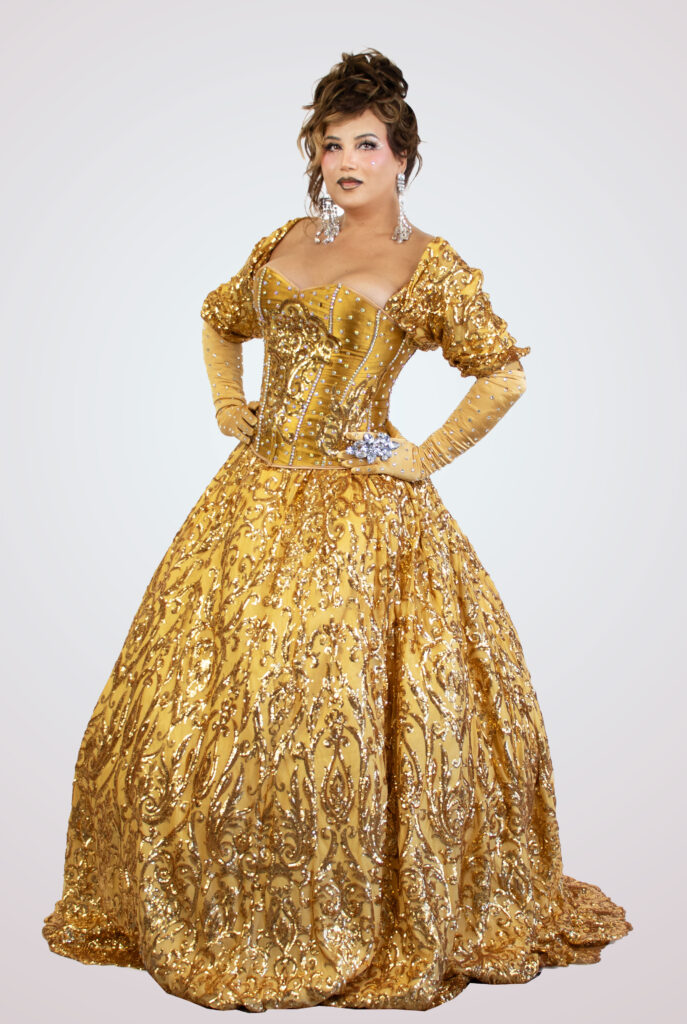
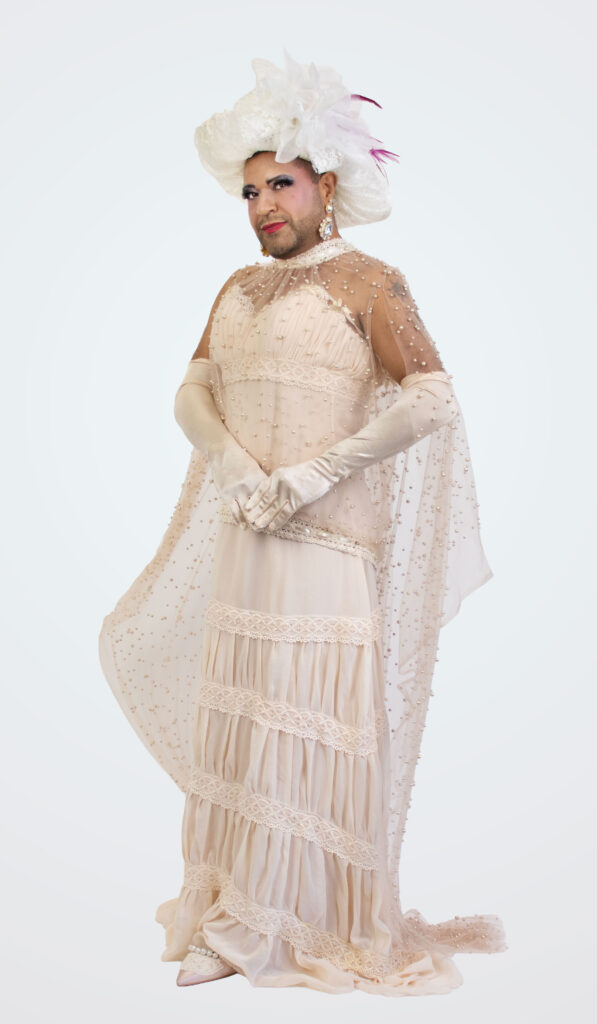
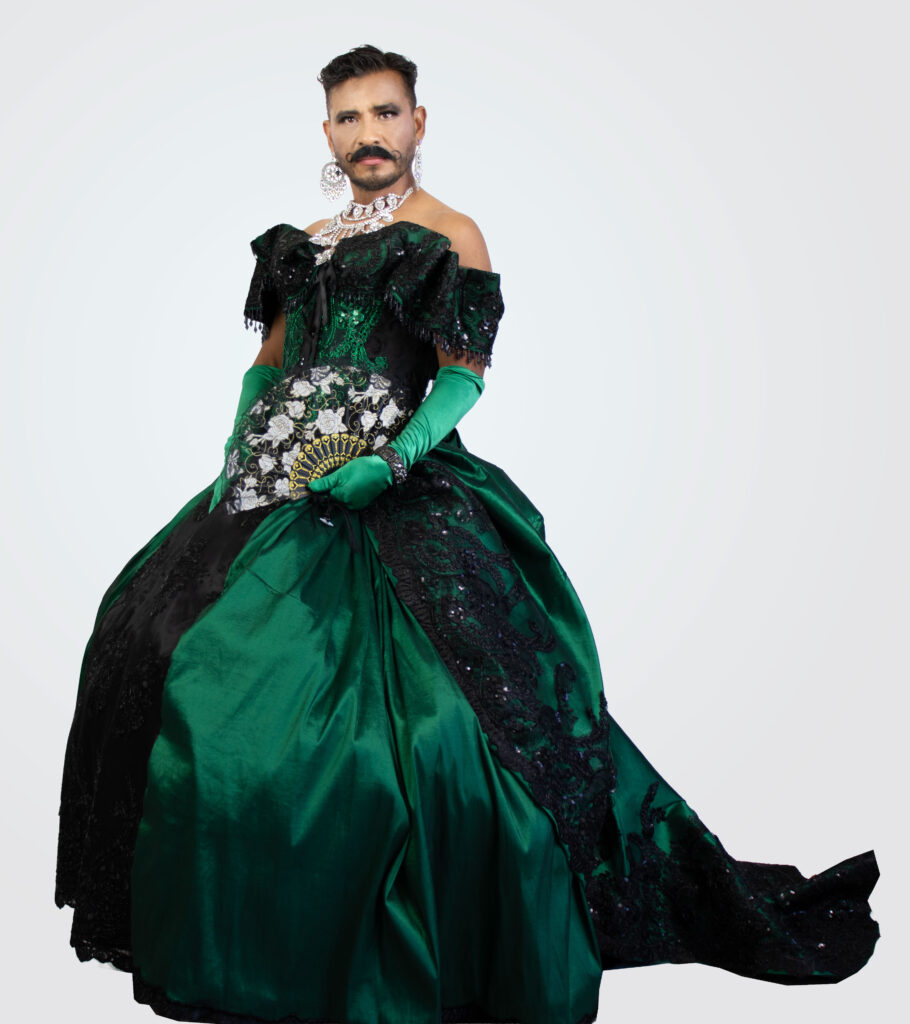
The evening will draw inspiration from the elegance of 1901, with a reception, music and dinner, along with a presentation about the history of the 41. The gala will also recognize individuals and organizations that have made an impact in the community before giving way to a dance with a DJ.
The original gathering ended because of intolerance. This gathering will exist because a community has refused to disappear.
“We are not trying to recreate the suffering of those who were there,” de la Torre says. “We want to symbolically give them back the night that was taken away from them and celebrate that, 125 years later, we are still here and now we can dance openly, with dignity and freedom.”
For de la Torre, remembering that history is also a way of recognizing the people whose courage helped create the freedoms LGBTQ+ people experience today.
“During generations, many LGBTQ+ stories were hidden, distorted or told through ridicule,” he says. “Recovering them in our own voice is a form of education, an act of justice and a way of returning dignity to people who could not publicly defend themselves.”
He is quick to point out that the struggle did not begin with Viva Vivo, and it will not end with this generation.
“We are part of a history built by people who resisted when being visible could cost them their family, their job, their freedom, and even their lives,” he says.
That history is one reason de la Torre wants people attending the gala to see themselves as more than spectators. He wants them to understand that they are part of an ongoing story.
“I want to invite our community, our allies and everyone who believes in dignity and equality to be part of a night that will have a much deeper meaning than a celebration,” he says. “We don’t want people to attend only as guests. We want them to recognize themselves as part of this history.”
The gala will also serve as Viva Vivo’s first major fundraising event after nearly 16 years of community service. Funds raised will help the organization strengthen its programs, build partnerships and reach more people throughout the San Diego-Tijuana region.
But the evening is ultimately about something larger than fundraising.
It is about memory.
It is about refusing to allow a painful history to remain frozen in shame.
And it is about recognizing that survival itself can become a form of resistance.
When asked to choose one WORD that represents his life and the work of Viva Vivo, de la Torre chooses resilience.
“For me, resilience does not only mean surviving,” he says. “It means transforming pain into purpose, getting back up without forgetting where we came from and using our own experience to open paths for other people.”
That word seems to capture the heart of both Hugo’s journey and Viva Vivo’s nearly 16 years of work. The organization has grown by responding to real people and real needs, one conversation, one connection and one act of support at a time.
Now it is taking that same approach to history.
A number once used to shame becomes a reason to gather. A story once told through humiliation becomes an opportunity for remembrance. A dance that was once interrupted becomes a dance that continues.
And 125 years later, the community is still here.
“We continue with memory, with freedom, with pride and with resilience,” de la Torre says.
The dance continues because we continue.
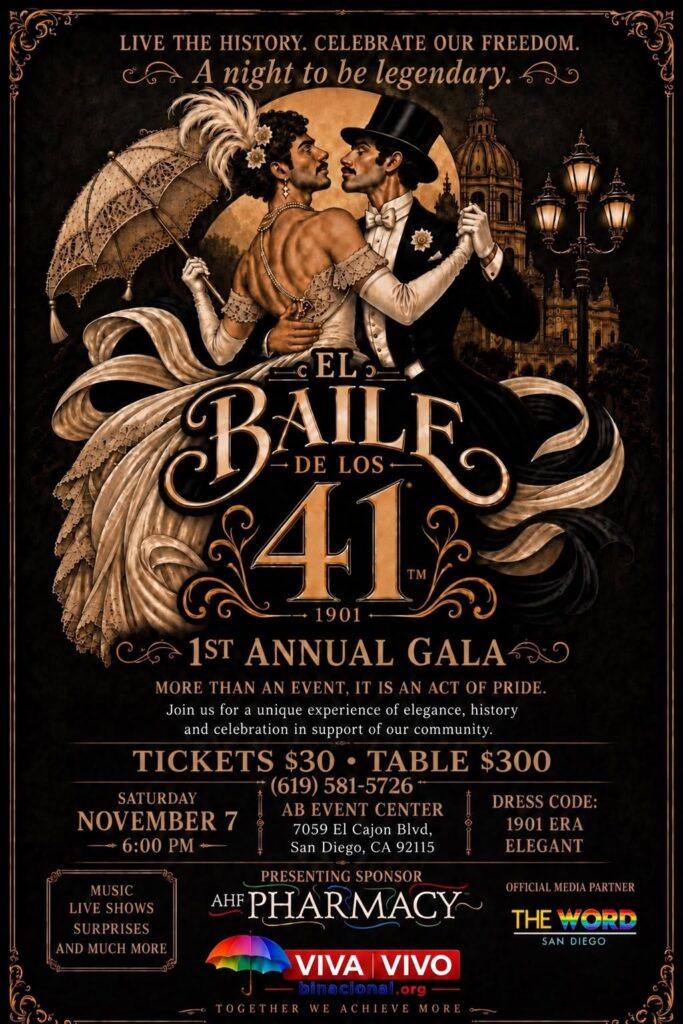
El Baile de los 41 will take place Saturday, November 7, 2026, at 6 p.m. at AB Event Center in San Diego. To learn more about Viva Vivo Binacional and the gala, visit Binacional.org or find Viva Vivo Binacional on Facebook and Instagram. For more information, contact Hugo de la Torre at (619) 581-5726 or hugorimza03@gmail.com.