

Where Dance Slips Into The Surreal: The Photographic Paintings of Lance Chang
By Patric Stillman
When viewers first encounter the work of photographer Lance Chang, there is often a moment of hesitation. Are these paintings? Are they photographs? The answer sits somewhere between the two.
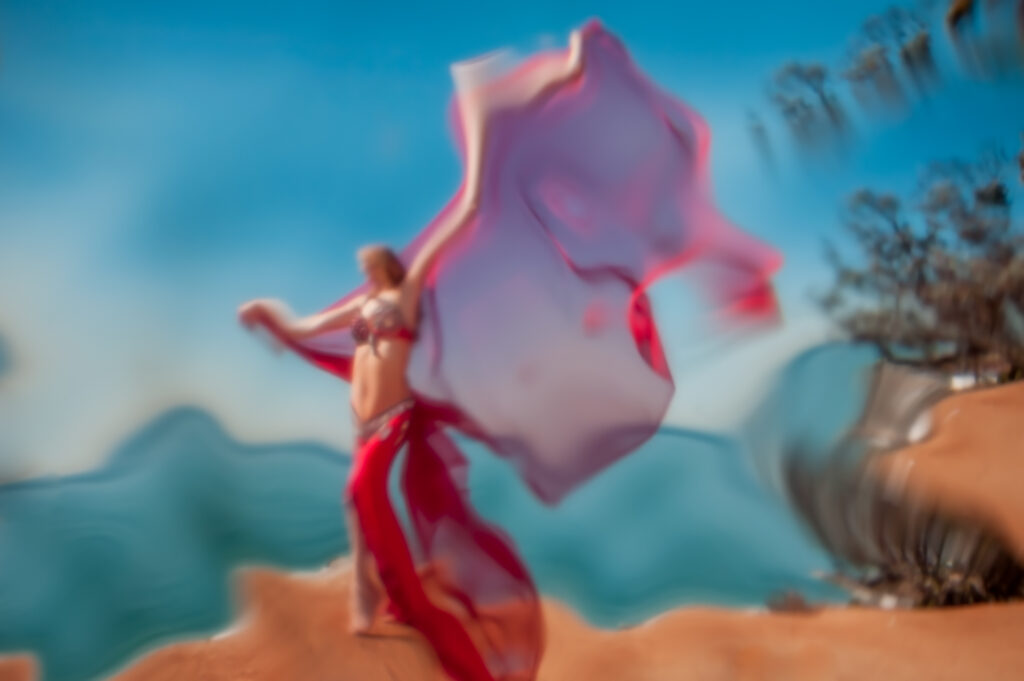
For more than a decade, Chang has developed a visual language that dissolves the boundaries between photography, painting and performance. His images of dancers, figures breaking apart into waves of color and light, capture movement as an unfolding experience.
That vision comes into focus this spring at The Studio Door with Dance Surrealist, Chang’s first solo exhibition with the Hillcrest gallery. Although his work has appeared in several exhibitions there over the years including on the cover of the gallery’s influential 50 Artists to Watch exhibition catalog, this presentation marks a milestone, bringing together works from different periods alongside new images that reflect the evolution of his approach.
Chang’s fascination with imagery began early. As a child he experimented with a Kodak Instamatic camera, photographing toy dinosaurs in the backyard. The results were often blurry and out of focus, but the impulse to capture images was already there.
That curiosity eventually led to formal study. Chang attended Pomona College, where he focused on painting, and later earned a photography degree from the Brooks Institute of Photography in Santa Barbara. The intersection of those disciplines continues to shape his work today.
“I studied painting under Karl Benjamin, who was known for hard-edge, vibrantly colored abstraction,” Chang explains. “That background influences my photography because people often assume the images are paintings.”
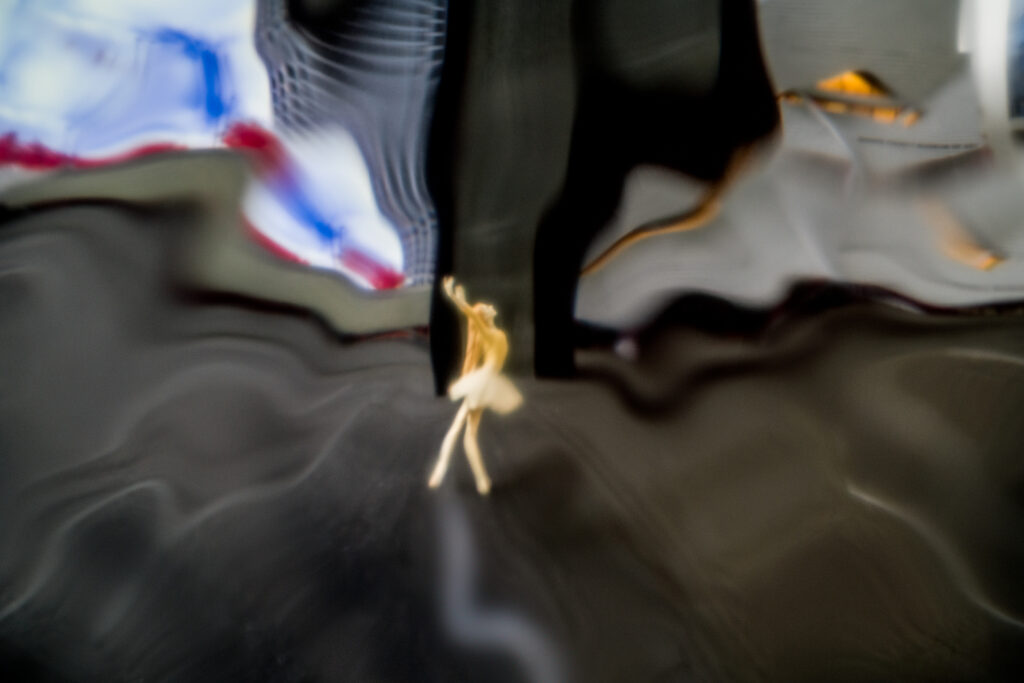
That confusion is understandable. Chang prints his photographs on archival watercolor paper and canvas, allowing the textured surface to soften the imagery and amplify its painterly qualities. The effect transforms the photographic image into something that feels closer to a watercolor wash than a traditional print.
The transformation does not stop there.
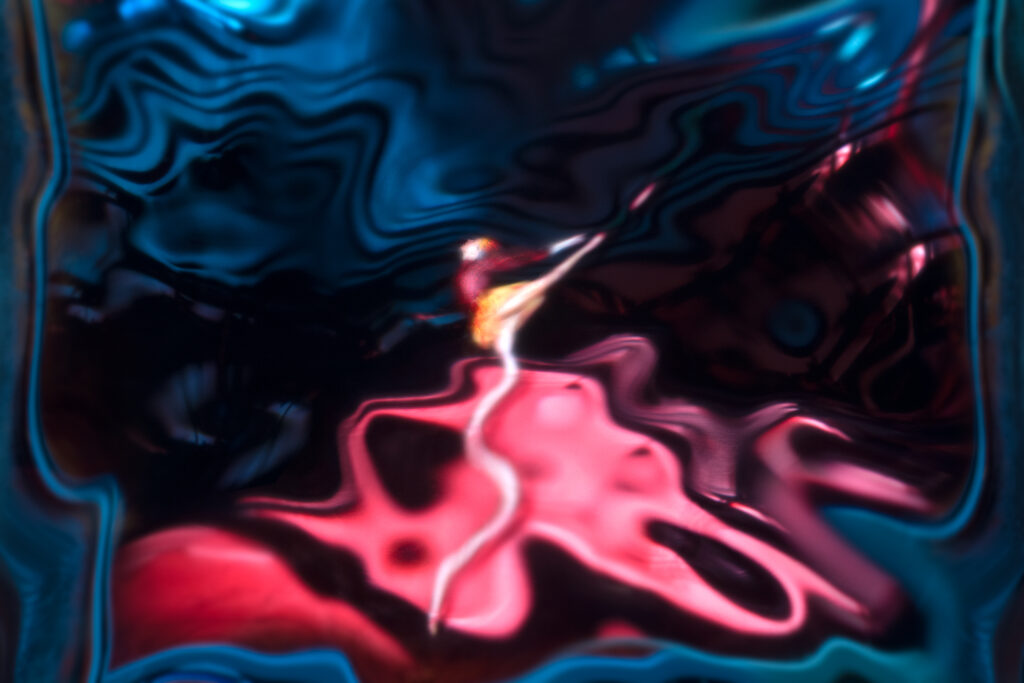
Although Chang captures his images with a digital camera, the fluid distortions that define the work are not created through digital filters. Instead, he uses a closely guarded analog technique, what he jokingly calls his “secret sauce,” to manipulate the images before printing.
The result is photography that feels less like documentation and more like memory.
Chang’s decision to photograph dancers grew out of practical circumstances during his student years. As a photography student with limited resources, he could not afford professional models. Ballet students and dancers, however, were often willing to collaborate in exchange for portfolio images.
“Dancers know how to hold difficult positions and understand how their bodies read visually,” Chang explains. “So I started working with ballet students and dance companies.”
What began as a practical solution became the foundation of his artistic practice.
Traditional dance photography often aims to capture the perfect pose at the height of a leap or gesture. Chang found that approach unsatisfying. Dance, after all, unfolds across time.
“I want people to feel like they’re inside the performance,” he says. “Not just looking at a dancer frozen in midair.”
To convey that sensation, Chang deliberately introduces blur and flowing color into the image. Figures dissolve into their surroundings, echoing the way movement spreads through space.
Art critic Peter Frank has described these photographs as dreamlike transformations in which the dancer merges with both environment and motion. Rather than documenting choreography, the images evoke the emotional and sensual force that lies beneath the dance itself.
Location also plays a key role in Chang’s process. Unlike many photographers who work primarily in studio environments, he prefers shooting dancers on location at industrial sites, landscapes, beaches and other unexpected settings.
The contrast between dancer and environment adds tension and atmosphere. Movement becomes part of the landscape rather than something isolated against a neutral backdrop.
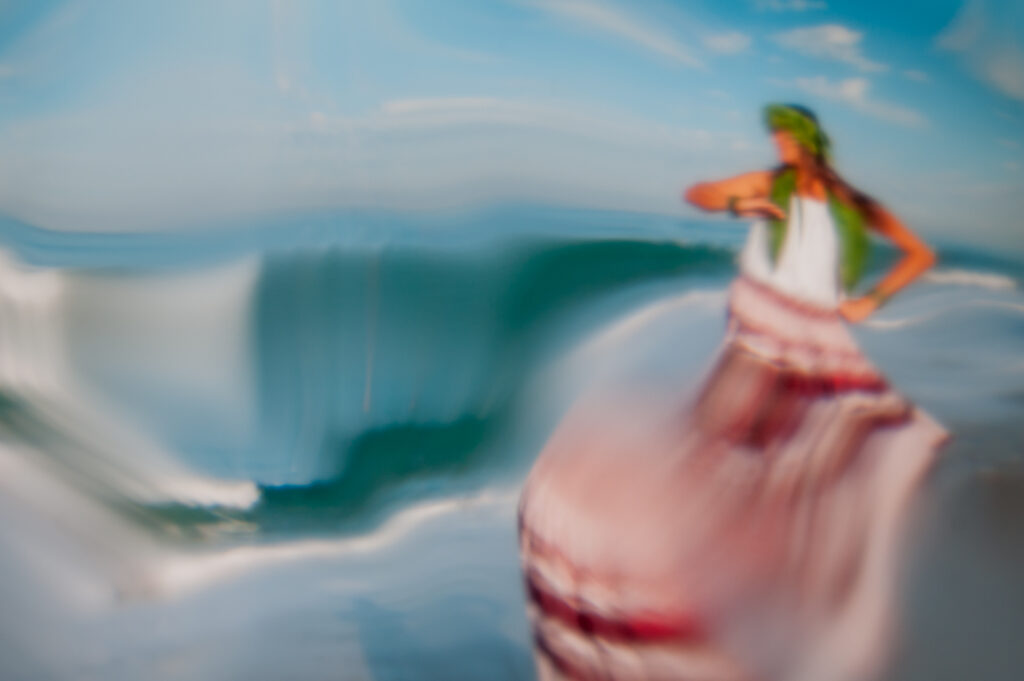
The fluid relationship between figure and space has drawn praise from longtime arts patron Joan Agajanian Quinn, who has noted the remarkable sense of motion in Chang’s work and the way his manipulation of background transforms the photographic surface into something almost cinematic.
Over time, Chang has expanded the range of dance traditions he photographs. Ballet remains central muse, but his collaborations now include Polynesian dancers, belly dancers, bailaoras, contemporary performers and other movement traditions. Each form introduces new gestures and rhythms into the work.
Yet beneath that variety lies a consistent artistic goal.
When asked to summarize the philosophy behind his imagery, Chang offers a single word: familiar.
“I try to create images that feel familiar even though people have never seen them before,” he explains. The images often evoke memories, dreams, or emotional associations that viewers bring with them when encountering the work.
That quality gives Chang’s photographs their lingering presence. They are recognizable yet mysterious. Images that feel as though they belong to memory rather than documentation.
For San Diego audiences, the exhibition also reflects the artist’s long connection to the region. Chang first moved to the city in 1989 and built his career here while transitioning from commercial photography to fine art.
His work has since entered private collections across the United States and Australia. Several early ballet photographs were even acquired by the National Museum of Dance in New York for its permanent collection.
Despite that recognition, Chang approaches the work with the curiosity of someone still experimenting.
Movement, after all, is never static.
Like the dancers he photographs, Chang’s images remain in motion—hovering between photography and painting, between documentation and dream.
And in those luminous moments, the dance continues.
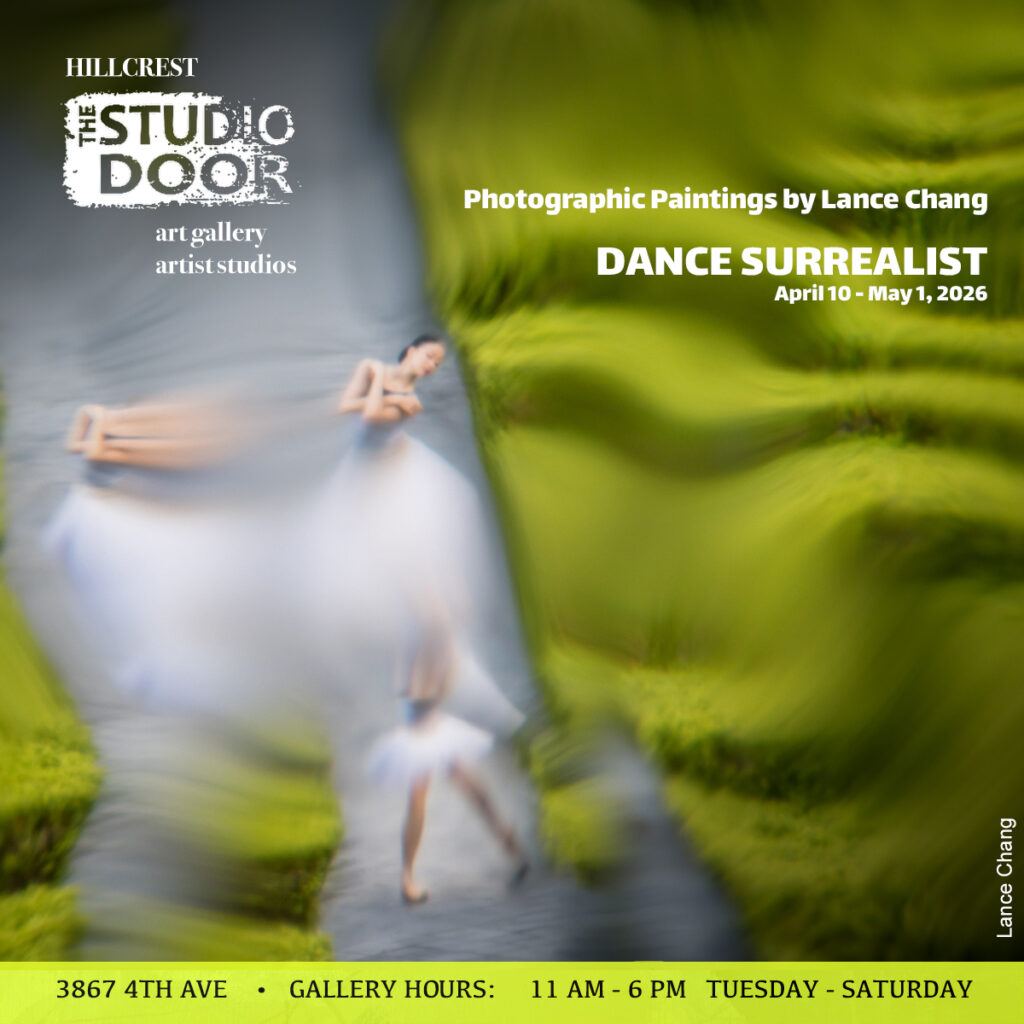
Exhibition Information
Dance Surrealist: Lance Chang Solo Exhibition
April 10 – May 1, 2026
Reception: Saturday, April 11, 6–9 PM
The Studio Door
3867 Fourth Avenue
Hillcrest Cultural District, San Diego