

Laughing Through It: Jason Stuart’s Life in Comedy, Truth, and Timing
By Cesar A Reyes
Jason Stuart laughs at the word “trailblazer,” and the eyeroll is barely restrained. “Trailblazer sounds SO glamorous,” he jokes. “Like I was out there in a coonskin cap cutting through wilderness. Honey, I was just a Jewish gay kid from Hollywood trying to get a booking in Burbank. That’s NOT the Oregon Trail; that’s the Desperation Trail!” It’s a perfect entry point into a career that, whether he shrugs it off or not, did carve out space for openly gay comedians long before it was safe—or marketable—to do so.
When Stuart came out in 1993, he wasn’t stepping into a welcoming spotlight; he was stepping into something closer to a void. “I was an anomaly in those days. I was like a circus act,” he says. Comedy clubs weren’t exactly lining up to book openly gay performers, and mainstream acceptance felt far off. What Stuart did have, though, was undeniable stage presence and a growing reputation. He had already been working as a featured comic, and the move to headliner came not because the industry was ready, but because audiences were. “Luckily, I was one of the first who could sell out,” he says. That mattered more than anything. The laughs forced the door open.
Looking at today’s landscape, Stuart doesn’t sound bitter—he sounds moved. There’s undeniable pride under the jokes. “Now look at the landscape today—we have LGBTQ+ performers everywhere, winning Emmys, headlining specials, being celebrated for exactly who they are,” he says. “And I’m not gonna lie… that genuinely moves me.” He pauses, then adds with a grin, “I just maybe… unlocked a door or two. Also, I’m kinda funny. Let’s not forget THAT part.”
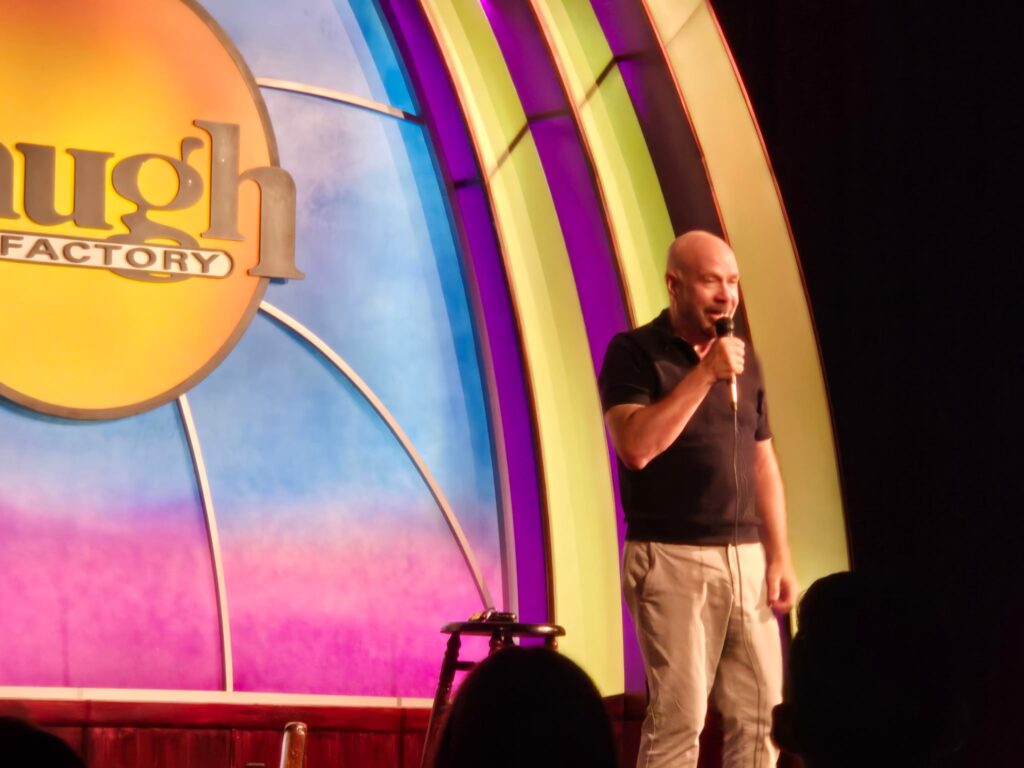
That mix—deflection, honesty, and a perfectly timed punchline—has defined his stand-up from the beginning. Stuart’s comedy has often been labeled “brutally honest,” a phrase he clearly enjoys poking at. “When straight comedians are brutally honest, they call it ‘raw’ and ‘courageous.’ When I’m brutally honest, people go—‘Oh honey, that’s a LOT,’” he says. “Like yes. YES, IT IS A LOT. Have you MET my life?!”
Early on, that honesty wasn’t just a style—it was survival. “My comedy was sort of… armor,” he explains. “You laugh at yourself before they laugh at you—that’s survival instinct.” It’s a familiar origin story for many comics, but Stuart doesn’t let it sit there. Over time, something shifted. The armor got lighter, the material got deeper. “Somewhere along the way I realized—wait. I actually have something REAL to say,” he says. “That’s when the work got genuinely interesting to me.” He delivers that realization with a wink—“I’m working on that in therapy. We’re making PROGRESS.”—but there’s real weight behind it. The jokes didn’t disappear; they just started carrying more truth.
That evolution shows up not just in his stand-up, but in his acting career, which spans more than 160 film and television roles. For Stuart, range isn’t about chasing parts that look like him—it’s about disappearing into ones that don’t. One of the most jarring examples came when he played a white, heterosexual, Christian slave owner in the 1831-set historical drama The Birth of a Nation. “About as far from Jason Stuart as you can get,” he says. And yet, that distance is exactly the point.
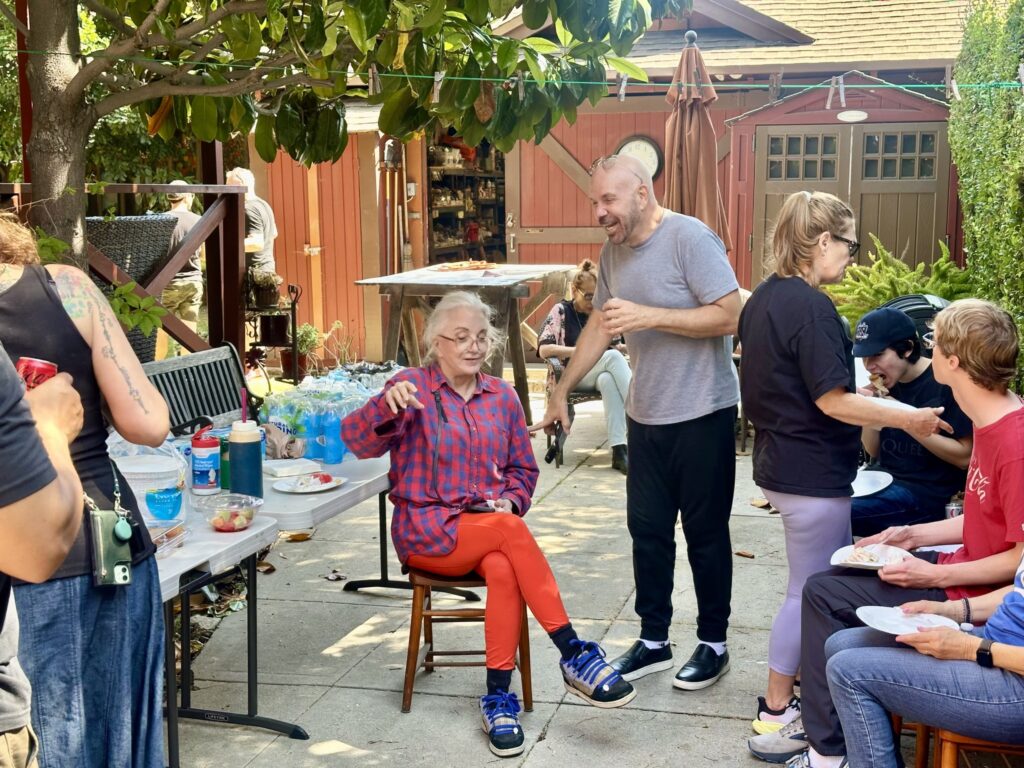
More recently, his work on the indie film Redlining—a project he co-wrote, directed, produced, and starred in—taps into something even more personal. “Another southern character, another man without a voice—and somehow THAT feels even more personal,” he says. The film explores generational wealth, systemic inequality, and the quiet, lasting damage of housing discrimination, but Stuart doesn’t approach it like a lecture.
“The biggest subjects are always best told through the smallest doors,” he explains. “You don’t make an audience understand redlining by hitting them over the head with policy and history books. You make them fall in love with one family, on one street, in Savannah, Georgia in the 1970s—and then you let the truth of what happened to that family do all the heavy lifting.” It’s a philosophy that mirrors his comedy: start personal, stay human, let the audience come to you. “That’s not a small story,” he adds. “It’s personal, it’s universal… it’s the kind of storytelling I want to do.”
Offstage and offscreen, Stuart has taken on a different kind of role—one that comes without applause or a spotlight. As National Co-Chair of the SAG-AFTRA LGBT Committee, he’s deeply involved in advocacy and mentorship, working to create opportunities for the next generation of performers. It’s not glamorous, and he’s quick to point that out. “There’s no applause, no green room, no craft services table,” he says. “It’s just showing up and fighting for people who don’t yet have the leverage to fight for themselves.”
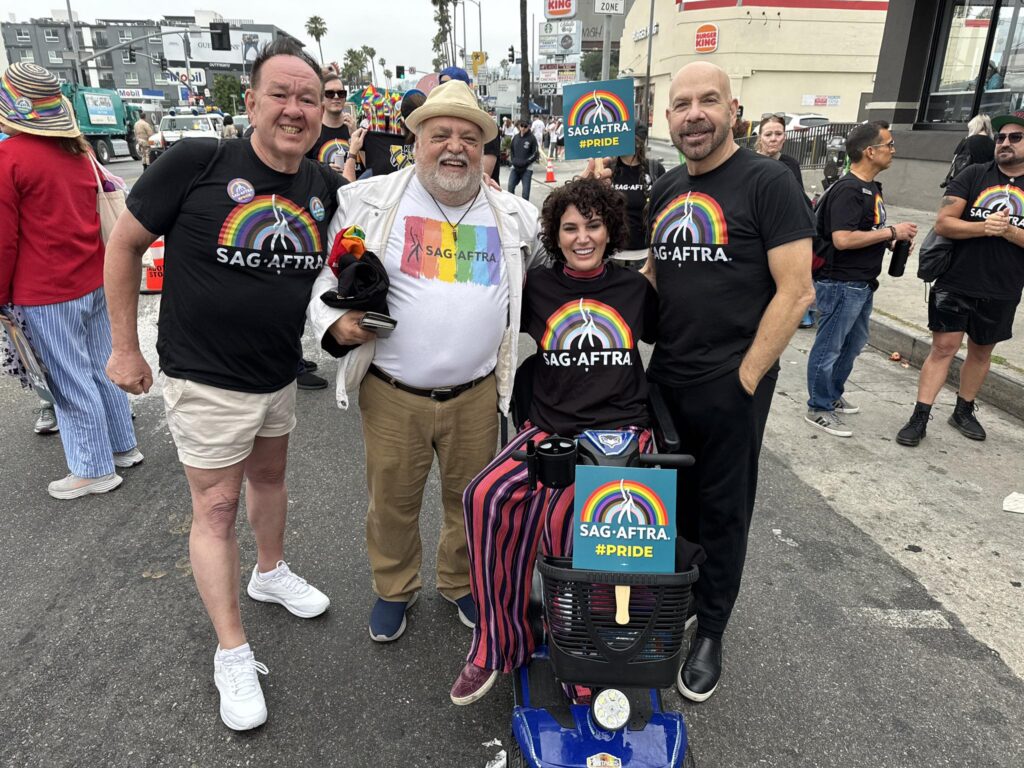
For Stuart, it’s also personal. “Somebody opened a door for me once. Maybe halfway. Maybe just cracked it. That’s enough to change a life,” he says. “So now if I’m in a position where my hand is on that door, how could I not open it all the way for the kid standing behind me?” That sense of responsibility sits alongside his creative work rather than competing with it. “The comedy and acting fed my soul. This feeds my purpose,” he says. “And at this point in my life, I need both.”
Still, no matter how many roles he’s played or projects he’s shepherded, Stuart keeps coming back to the stage. It’s where everything started, and it’s where the truth lives. “Nothing else tells you the truth like a live audience,” he says. “Not your therapist, not your agent, not your best friend.” There’s something almost spiritual in the way he describes it. “Hundreds of people laughing simultaneously is the universe confirming you’re exactly where you belong.”
That’s exactly what he’s bringing with him to San Diego’s Laugh Factory this April 17th & 18th, where he’ll perform alongside fellow comedian Belinda Carroll. The promise is simple, and very on brand: “Honesty, surprise, and a few hours of laughs so you can forget all the madness in the world,” he says. Then, just before the moment gets too sincere, he undercuts it with one last punchline: “So come as you are. But no shorts, please!” It’s classic Jason Stuart—heart, humor, and just enough edge to keep it real.