

Visibility at the Border: Liliana Hueso on Art, Activism, and Living Fully as a Queer Chicana
By Cesar A Reyes
Liliana Hueso does not separate her life from her work. She can’t. For her, art and activism were always the same road, even before she had the language for it.
“My name is Liliana Hueso,” she says, “and I identify as an artivist — an artist whose work is deeply rooted in activism.” She uses she/they pronouns, moves between photography and film, and works primarily in documentary portraiture. But those are just the tools. The heart of their work is visibility — especially for LGBTQIA+ communities living in the San Diego–Tijuana borderlands.
Liliana has lived in the transborder region since 2012. Raised between Mexico and the United States, she grew up navigating two languages, two cultures, two ways of being. But she had never lived directly on the border before. When she arrived, something clicked.
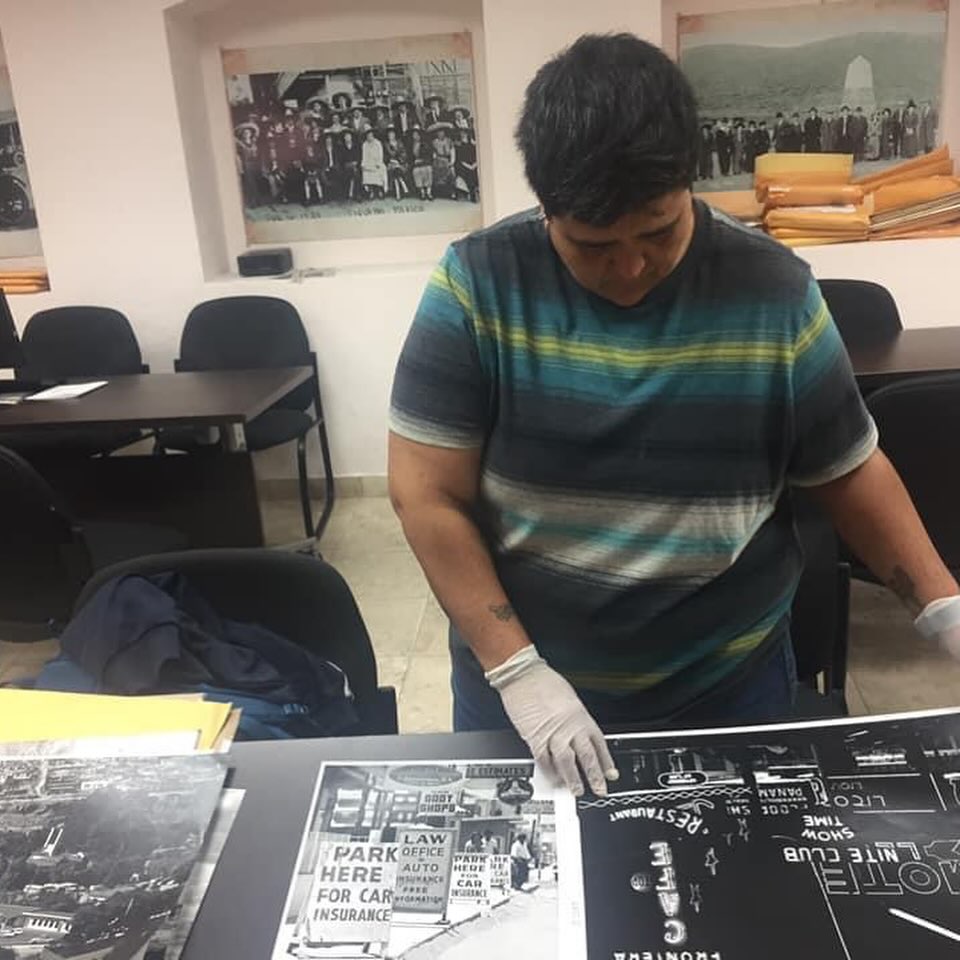
“From the moment I arrived, I felt at home on so many levels,” they say. “Living in this transborder space has deeply shaped both my identity and my work.”
Here, she found others who shared her lived reality: bilingual, bicultural, and queer. In San Diego and Tijuana, her Mexican heritage, her queerness, her bilingual tongue, and her Chicana politics could coexist in a tangible way. The border, often described as a line, became for her a meeting place — a crossing of identities rather than a division.
But activism didn’t begin in the borderlands. It began in their childhood home.
“When I think about growing up, I realize activism has always been present in my life, even if I didn’t call it that.”
Her parents raised six children. Money was tight. They worked tirelessly to keep food on the table and clothes on their backs. And still — somehow — there was always room for others. Newly arrived families from Mexico slept on their couch. Strangers stayed a night, sometimes a week. Meals stretched. Help was offered. Jobs were found. Schools were navigated.
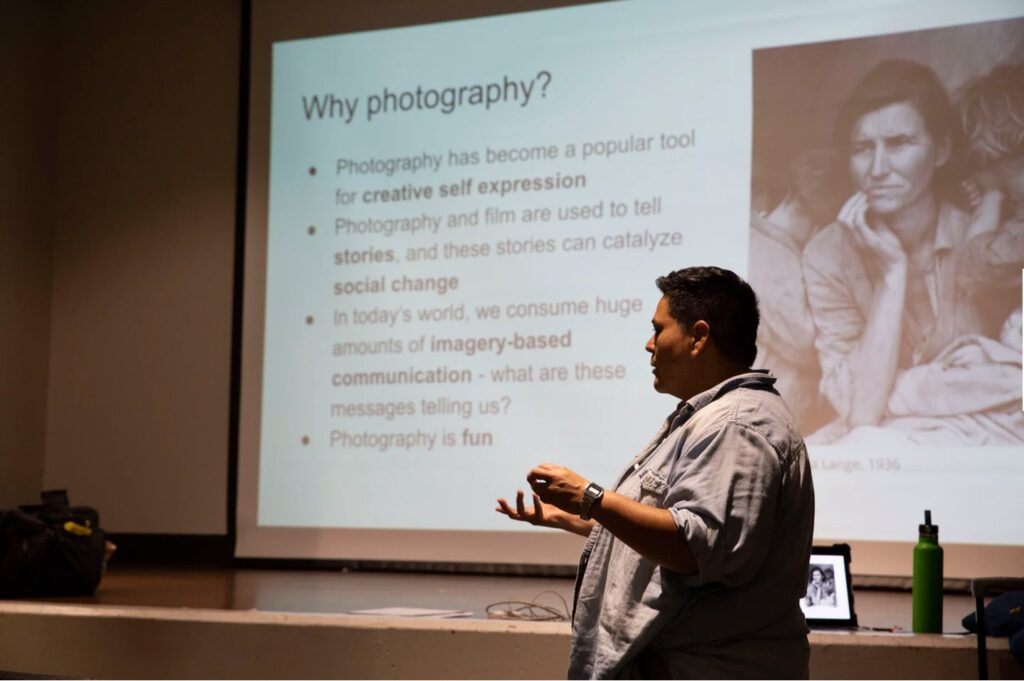
“I didn’t see that as activism at the time,” Liliana reflects, “but in many ways, it absolutely was.”
Service wasn’t abstract. It was practical. It was embodied. It was making space when there wasn’t much space to give.
Later, at a Jesuit college in Guadalajara, she joined a missionary group led by a priest who challenged them to rethink what it meant to “serve.” Instead of preaching, he asked them to ask communities what they needed — and to bring their professional skills to the table. Communications students, architects, artists, law students — all were pushed to think about how their craft could become a tool for justice.
That idea lingered.
The turning point came in 2003–2004, when Liliana was living in the Bay Area and found the Queer Women of Color Media Arts Project (QWOCMAP). She enrolled in one of their filmmaking workshops for queer women and trans people of color. It was transformative.
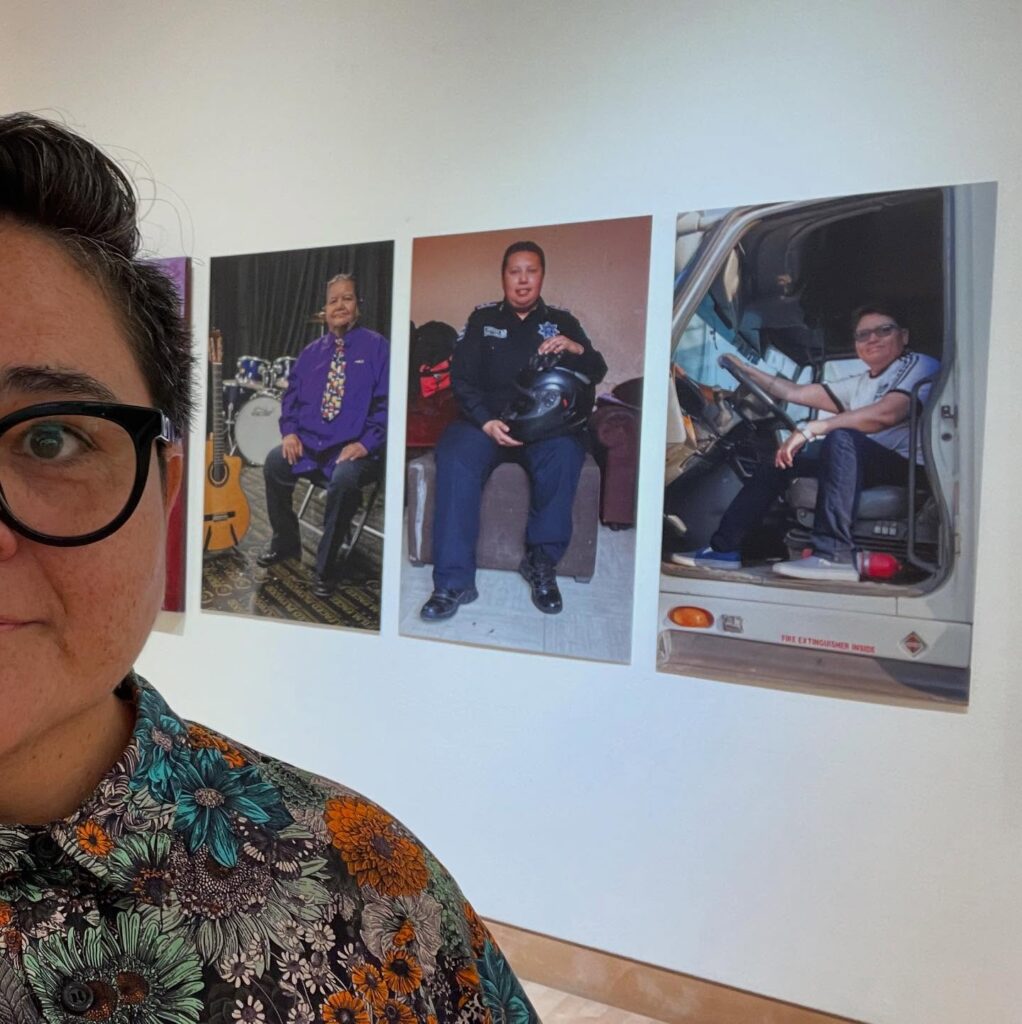
“I began to understand the power of telling your personal story — how it can become universal, how it can empower, educate, give visibility, and build community.”
Up until then, much of her media work had lived in commercial spaces. But that workshop cracked something open. She saw that her camera didn’t have to sell anything. It could witness. It could affirm. It could testify.
“There was no going back,” they say.
She eventually became deeply involved with QWOCMAP, first teaching workshops and later stepping into leadership. Around the same time, she stepped more fully into her queer identity.
“I embraced my identity fully and was surrounded by a community that lifted me up,” she says. “Because of that, I felt a responsibility to show up in those same ways for others.”
That responsibility eventually turned inward. During her Master’s program in photography, Liliana made a decision that felt both terrifying and necessary: she would turn the lens on herself.
She began exploring what it meant to be a butch woman living in Tijuana. A transborder citizen. A queer Chicana searching for images that reflected her own existence.
“Since I was a teenager, I had been searching for representation — for other ways of being a woman, for alternatives to simply following a norm.”
And she rarely found them.
That absence leaves marks. It whispers questions: Am I real? Do I belong? Is there a place for me?
Her portrait work is her answer.
“It’s a collaborative process,” she explains, “but the main goal is always to make something where others can see themselves represented — or see possibilities for being ‘different.’”
When Liliana speaks about being Chicana and lesbian, she doesn’t talk about theory. She talks about wholeness.
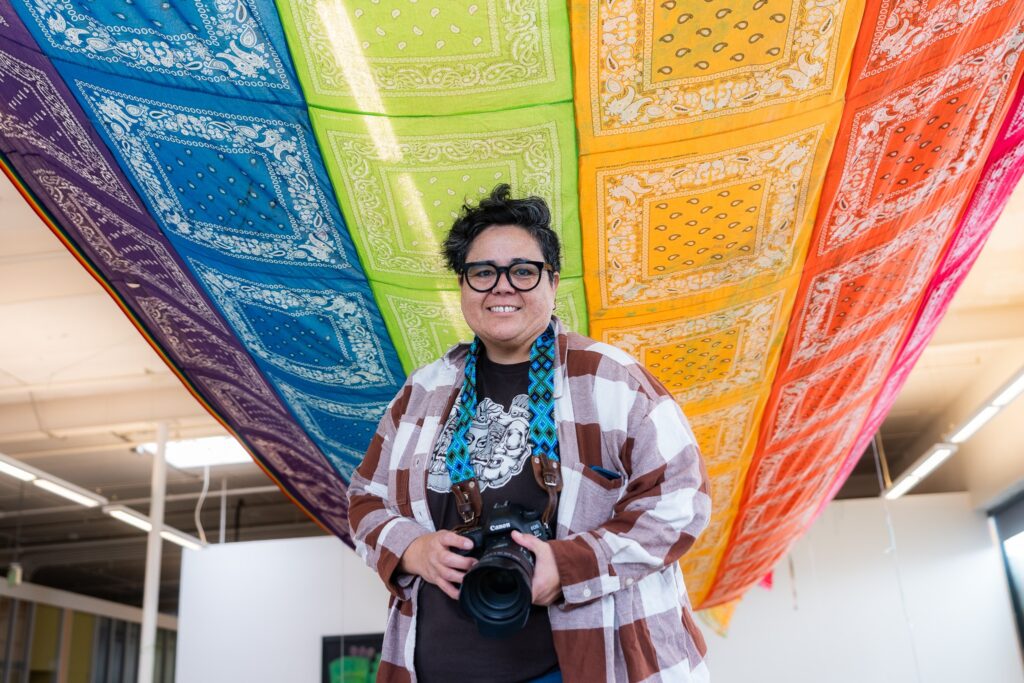
“I came into my Chicana identity by choice,” she says. “It wasn’t something that was simply given to me — it was something I consciously stepped into and claimed.”
She wasn’t raised in Chicano culture. She found it later, in her mid-30s, when she recognized how deeply its history, politics, and resistance mirrored her own journey. Claiming “Chicana” was intentional. So was claiming lesbian. So was claiming dyke. Butch. Woman. Mexican heritage. American upbringing. Bilingual. None of it is separate.
“I cannot educate or lead by example if I am fragmenting myself,” she says. “I cannot dismantle who I am into parts to make others comfortable.”
That refusal to fragment is central to her activism. She walks into spaces whole. Sometimes that wholeness is uncomfortable — in queer spaces, in Chicano spaces, in institutional spaces. But she insists on it.
“I exist at the crossing of all these identities at once,” she says. “Intersectionality is not theoretical — it’s embodied.”
Today, as part of the educational series The Dykes and Their Friends presented by Lambda Archives of San Diego, Liliana sits alongside elders who carved paths before her. The moment is not lost on her.
“My queer Chicana self could not be more in awe,” she says. “To sit at the same table and be in conversation with these trailblazers… it’s powerful.”
In a political climate where queer histories are censored and erased, she sees storytelling as resistance.
“Coming together to remember, document, and speak our truths is an act of resistance.”
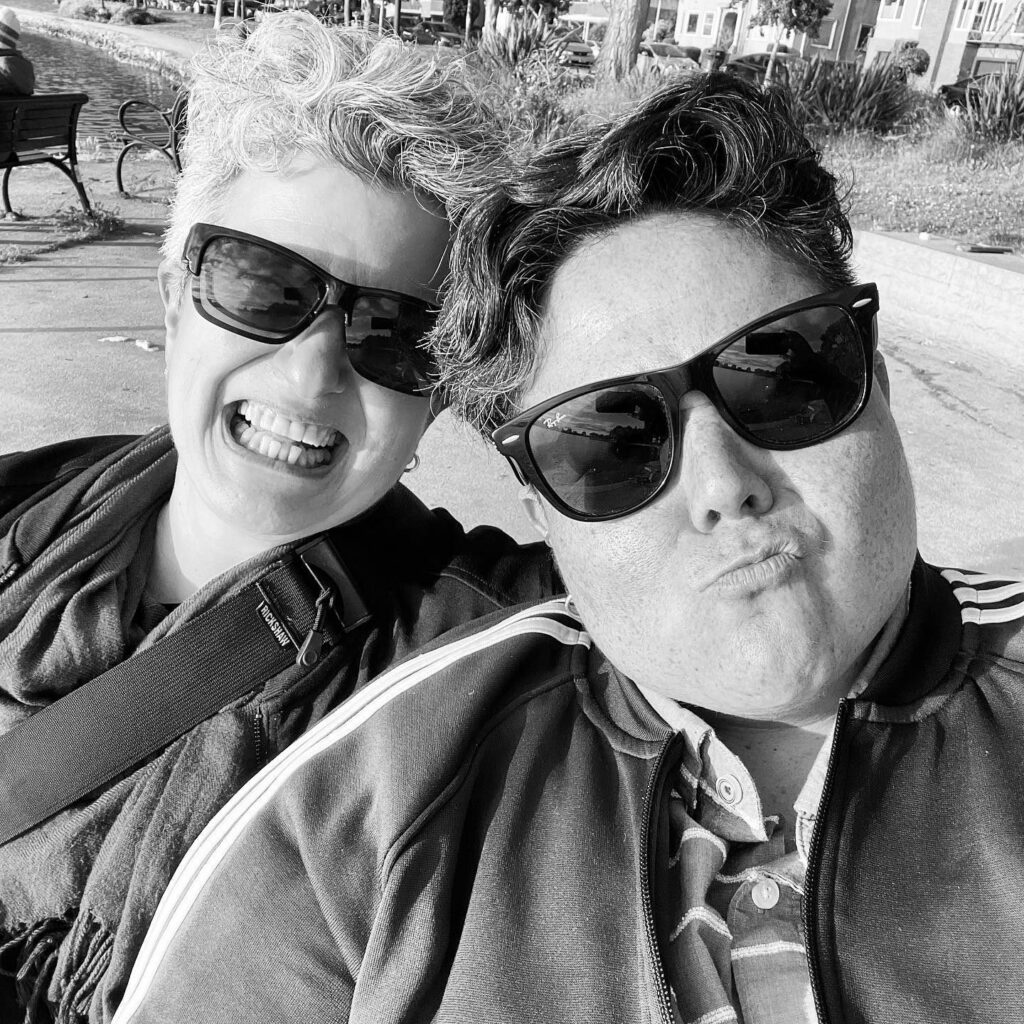
If she had to choose one WORD to define her work, it would be this:
“Visibility.”
“When we are visible, we are saying: we exist, we have always existed, and our stories matter.”
For Liliana Hueso, visibility is not ego. It is survival. It is lineage. It is love. And in a time of erasure, she believes choosing to be visible — and helping others be seen — is nothing short of radical.