

Living Out Loud: Teresa Oyos on Love, Activism, and Leaving a Legacy
By Cesar A Reyes
Before she talks about activism or organizing or archives, Teresa Oyos goes back to a little house in San Diego and two people who made her feel safe in the world. “I was raised by my grandparents, Manuel and Amelia,” she says. She doesn’t just mention them — she carries them. “I honor them every day by having my best life.” It’s a promise she’s kept for decades.
She was born in San Diego and raised by her grandparents. When she talks about them, her voice softens. Manuel was the dreamer. An artist. A lover of nature. He taught her how to look at the world — not just see it, but feel it. Amelia was practical, steady, rooted. She loved cooking. She loved companionship. She loved being with her granddaughter. “That was a beautiful process,” Teresa says of growing up with them. Not dramatic. Not chaotic. Just beautiful.
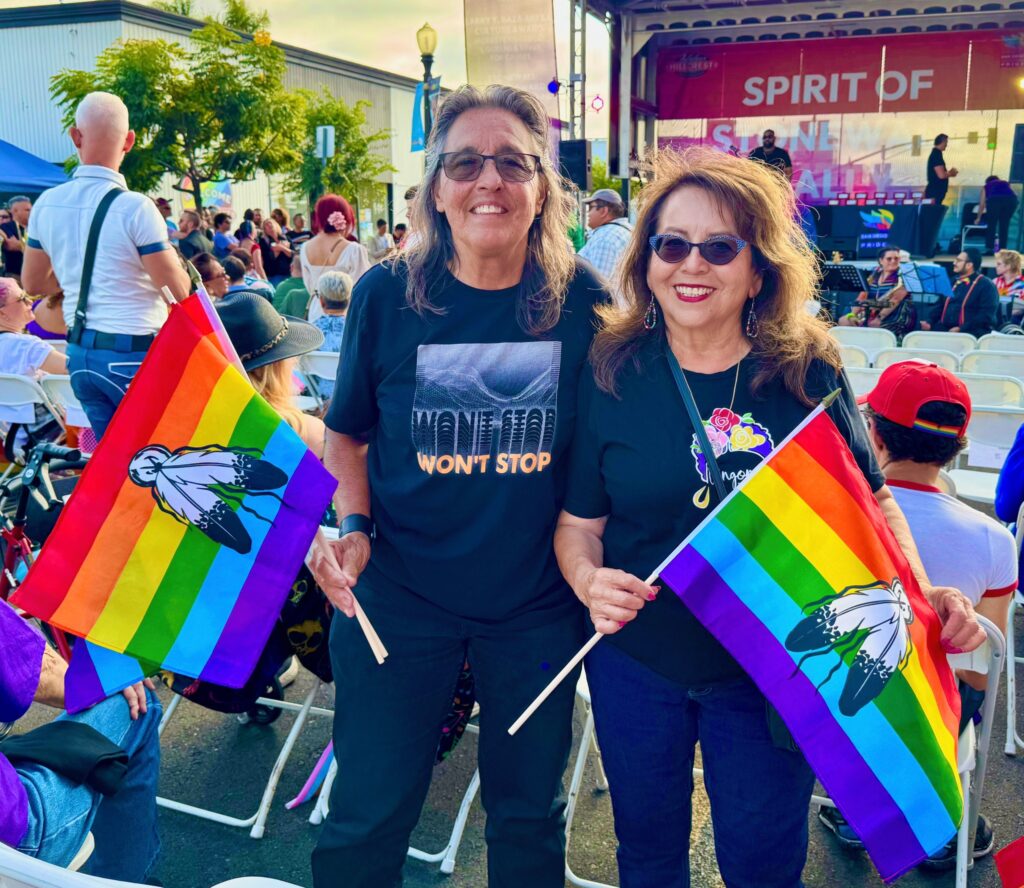
As a kid, she was always outside — climbing trees, riding her bike, chasing the sun. Nature was part of her home. And that love of being “out and about” would later turn into something bigger: being out in the world, being visible.
In the early 1970s, Teresa went back to school at City College. That’s when politics stopped being abstract and started feeling personal. The Chicano movement was alive. Chicano Park was just getting started. Murals were going up. Voices were rising.
She volunteered with the United Farm Workers and spent a summer living in the boycott house. “All we did was organize during the week, call people, and then boycott on the weekends.” It was gritty work. Repetitive. Exhausting. And completely transformative. “I learned a lot,” she says — the kind of “a lot” that rearranges your sense of purpose.
But there was still a part of her she hadn’t fully stepped into. That shift came because of a nudge from her counselor, Alicia. There was going to be a panel discussion about “women loving women.” Alicia told her she should go.
“So I went,” Teresa says, almost laughing at how casual that decision sounds now. She sat in that room listening to women talk about their lives and their community. Something clicked. “I thought, ‘that’s very interesting.’” That understated phrase carries the weight of recognition — the slow bloom of learning who you are.
The women mentioned a place called Diablos. Teresa had never heard of it. That night, she went. “That was quite the experience, going to my first lesbian bar.” You can imagine it — the nerves, the music, the charged air of a space where women could finally exhale. That night wasn’t just a party. It was a door opening.
“I came out at that time,” she says. Not long after, she became involved with Las Hermanas Cultural Center and Coffee House. Far from just a coffee shop, it was a sanctuary. They served coffee, smoothies, Amazon sandwiches. There was music — music which reflected the women served. Holly Near. Cris Williamson. Lesbian artists whose songs felt like lifelines.
“It was a wonderful time,” Teresa says. You can hear the warmth. Las Hermanas wasn’t just about art; it was about building something from nothing. A place where Latina lesbians could see themselves reflected back with pride.
Her life moved forward in chapters. She didn’t stay with her partner at the time, but she eventually met Rose. They’ve now been together nearly 39 years. “It’s been very fulfilling,” she says, and there’s a reverberating strength in that understatement. Nearly four decades of choosing each other — through activism, recovery, and change.
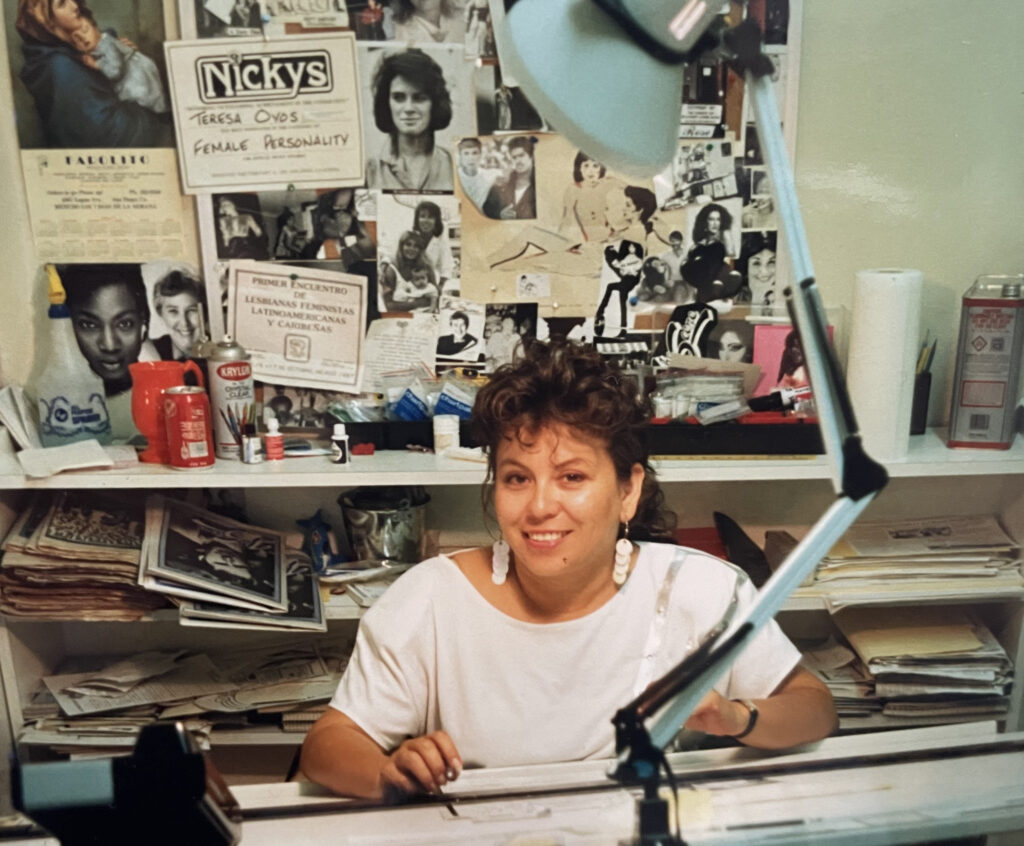
Teresa worked at The Gayzette, where Chris Kehoe was editor. It was there she was encouraged to help start Orgullo, the first gay Latino organization in San Diego. Alongside Adam Gettinger-Brizuela and Franko Guillen, she built something that hadn’t existed before. They held fundraisers. They created community. “It was a great, great time.”
But life isn’t a straight line of victories. After some time, Teresa stopped drinking. She doesn’t dramatize it. She just says it plainly: “I got clean and sober.” And then she went to work — HIV/AIDS outreach, handing out condoms and information when fear and stigma were everywhere. She worked for the first organization in San Diego to do that kind of outreach. Later, she worked at UCSD’s HIV Neurobehavioral Research Center.
She saw the crisis up close. She saw who was ignored. She saw who survived.
In North Park, she got involved with Bienestar, an LGBT Latino organization lead by Carolina Ramos. They organized a Vagina Fest — unapologetic, bold, joyful. “It was very well attended,” she says, smiling at the memory of something so unabashedly alive.
Her activism widened: advisory boards, the HIV Women’s Conference, substance abuse recovery, community organizing. “It’s been an incredible journey being involved with the community,” she says — the HIV community, the recovery community, the LGBTQ community. For Teresa, they are all one road.
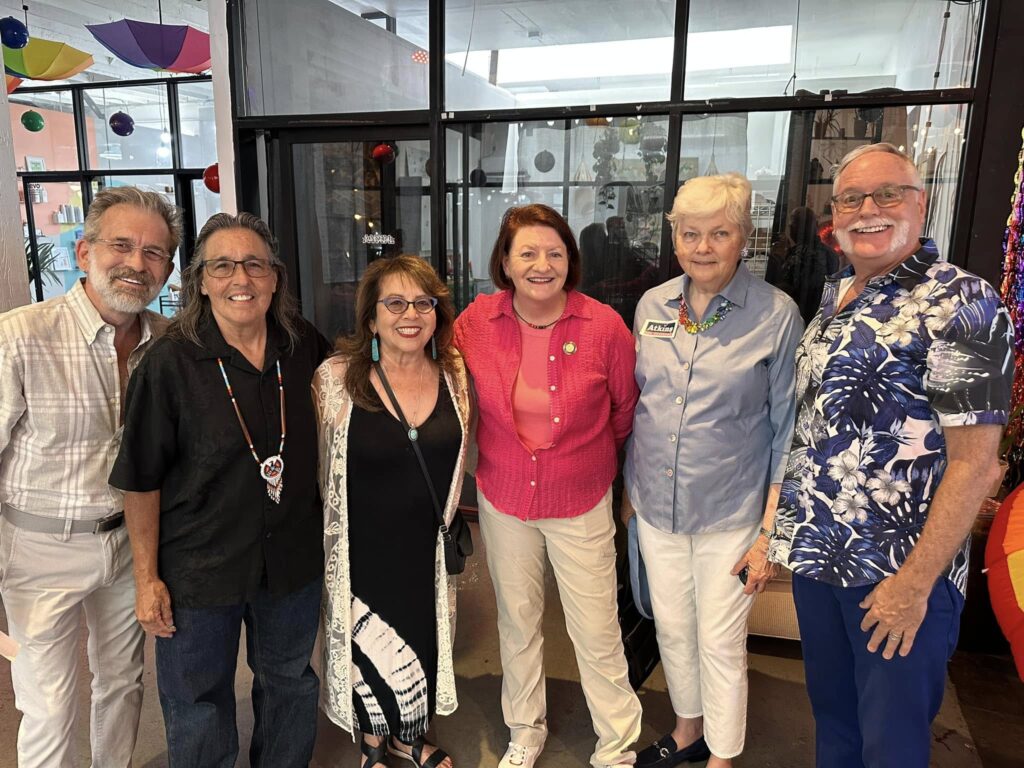
When she talks about identity, she doesn’t describe conflict. “For me, I’ve always felt like it flowed from being a Chicana into being a Latina lesbian.” Flowed, as a natural revealing of the full and incredible person.
Sure, when she returned to Chicano Park after coming out, some people began to act differently towards her. “Yeah, I did get treated a little different by certain people.” But she refused to shrink. “That didn’t stop me from celebrating that part of myself.”
Now, standing at the Lambda Archives, surrounded by calendars from Las Hermanas and the stories of those who came before, she feels the weight of history — and the responsibility. “It’s so important for us to tell our stories so that young people know where we come from.”
Especially now, she says, “since the administration is trying to get rid of us.” The urgency is real. Visibility isn’t vanity. It’s survival.
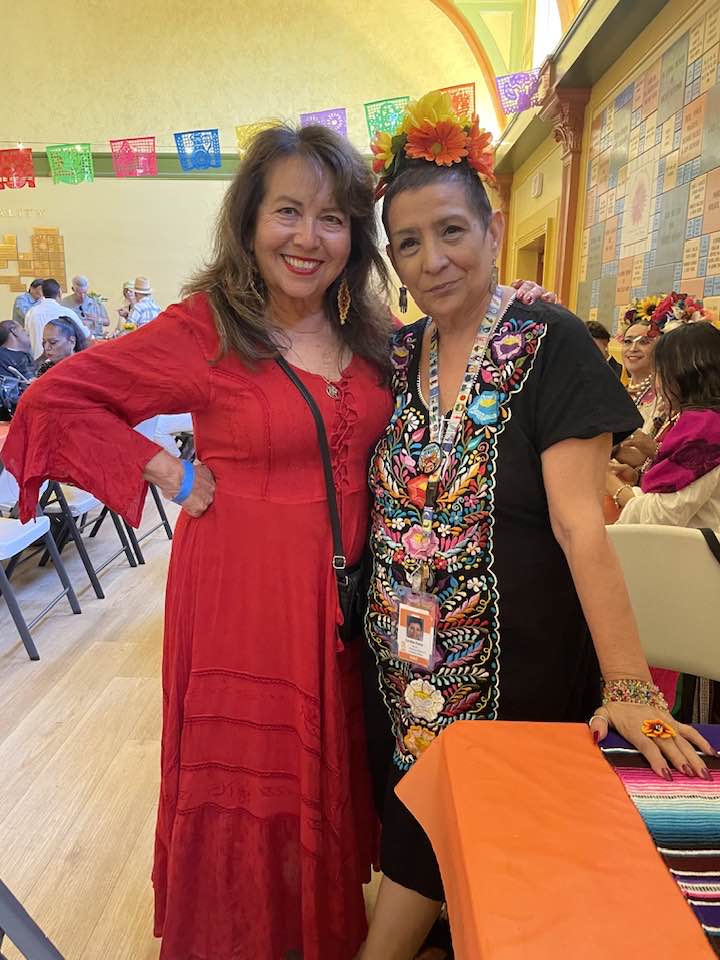
She’s not marching the way she once did, but she’s still active. She’s on the board of Stepping Stone. She shows up in her recovery community. She gives back.
“If we continue to be active,” she says, “then that helps the situation.”
And if you ask her for a WORD to describe herself? She doesn’t hesitate. “Chingona.”
It’s well earned.