

LGBTQ Allies: Sisters Pizza’s Emily Green Lake on Allyship, Visibility, and Building Community
By Cesar A Reyes
If you’ve spent time in Hillcrest, you’ve probably felt the presence of Sisters Pizza—bright, welcoming, and unmistakably community-rooted. Behind it is Emily Green Lake, who has called San Diego home for twenty years. “I opened Sisters Pizza in Hillcrest almost seven years ago,” she says, “and we expanded to North Park this past year.” She shares it with a sense of gratitude, like she’s still a little amazed by how far things have come.
Emily’s connection to the LGBTQ community started long before the restaurant, shaped in childhood by her aunt Barb. “My first connection to the LGBT community was through my aunt,” she recalls. Barb worked as a music executive in Manhattan in the 1980s—“very Working Girl, but make it queer,” Emily laughs. Growing up around her offered a glimpse into queer culture at a time when such visibility was rare, and Emily talks about it with genuine affection. “It was pretty cool,” she says simply, though the impact is clearly anything but small.
When she moved to San Diego, she found herself naturally drawn to Hillcrest. “That’s where all my friends were hanging out,” she remembers. Weekends at Hamburger Mary’s, birthdays and celebrations at Lei Lounge—these weren’t just outings; they were her early steps into the heart of the community she would one day serve in a much larger way. So when she began shaping the idea for Sisters Pizza in 2017, Hillcrest wasn’t just the logical location—it was home. “I already knew a lot of neighbors, and it’s been the pleasure of a lifetime getting to know so many more,” she says.
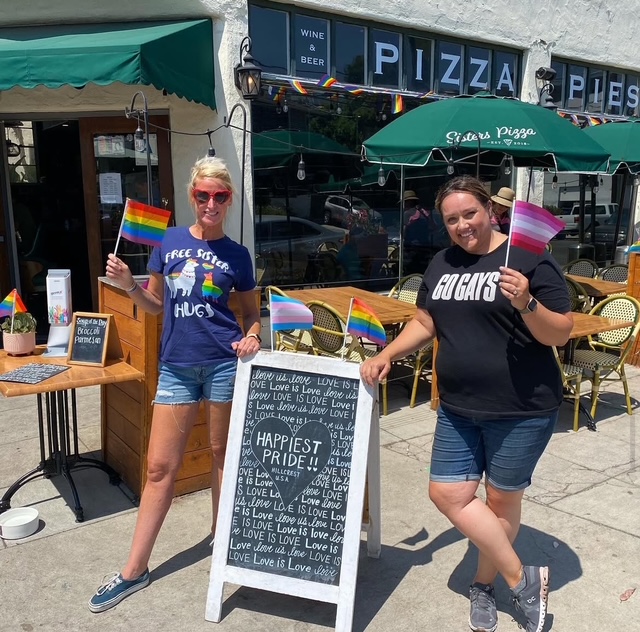
Her philanthropic involvement deepened after 2016, in response to the political climate that increasingly targeted LGBTQ people—especially transgender individuals. “It became apparent the queer community, and after 2020 our Trans siblings, would be targeted and scapegoated… more than ever in our lifetime,” she explains. The rise in hostility strengthened her determination to show up in ways that matter.
Today, she supports an impressive number of local organizations and events. Sisters Pizza is a sponsor of Red Dress Party San Diego, helping raise funds for HIV/AIDS prevention and education. Emily also sponsors A Sweet Affair, the main fundraiser for POZabilities, a group dedicated to supporting people living with HIV. Her team proudly supports Bears San Diego, and the restaurant contributes to Hillcrest Honors, a celebration recognizing outstanding community members. Sisters Pizza is also a sponsor of Festival of Trees, benefiting Big Gay California, and they back multiple LGBTQ intramural teams throughout the year.
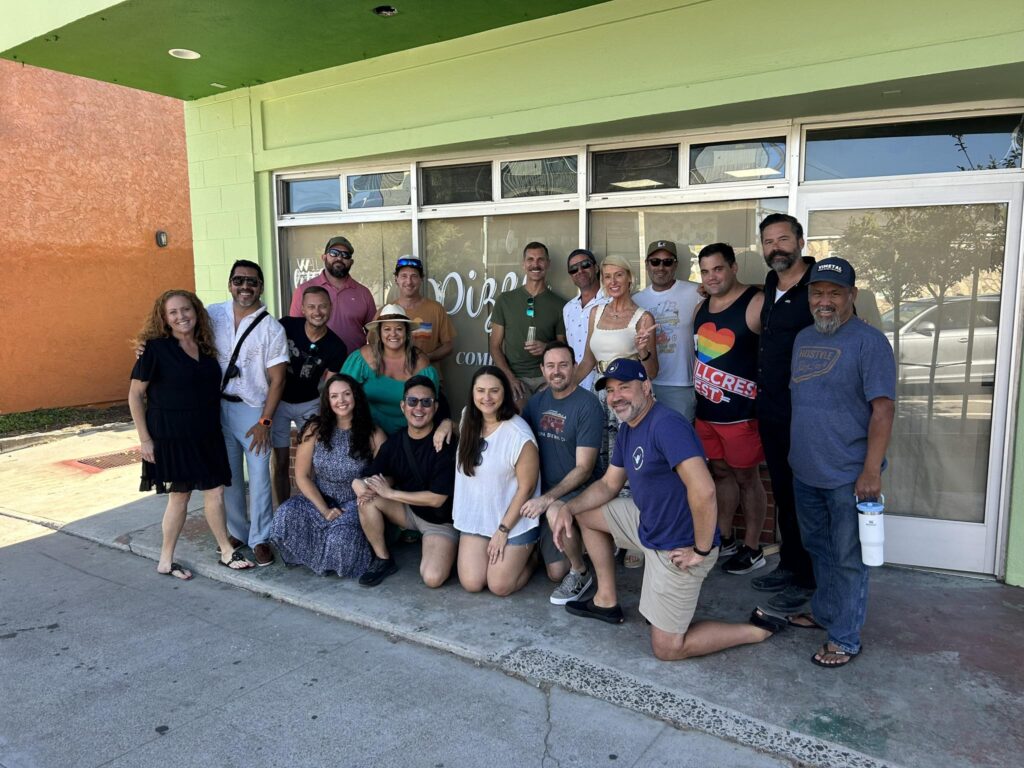
One particularly meaningful partnership is with the Donovan Detention Center Pride celebration. “TikTok sensations Trino and Adam came to Sisters to enjoy dinner and express their thanks,” she says, still a bit delighted by the memory.
When asked what being an ally means, Emily’s answer is immediate and steady. “Loving thy neighbor regardless of who they love and how they love as long as it’s consensual,” she says. She emphasizes the importance of speaking up—consistently and without hesitation. Inclusivity, for her, isn’t a slogan; it’s daily practice. And yes, that sometimes attracts online backlash. “Random trolls will leave bogus reviews or homophobic comments,” she says. But she keeps her perspective sharp: “Our restaurant is inclusive to all who respect all. If inclusivity isn’t their thing, there are plenty of other places to dine. In other words, boy, bye!”
That sense of humor shows up often—like when a guest suggested Sisters Pizza make shirts that say “Sisters Pizza: Pizza… for the gays!” Emily laughed, and admits she’s actually considering it.
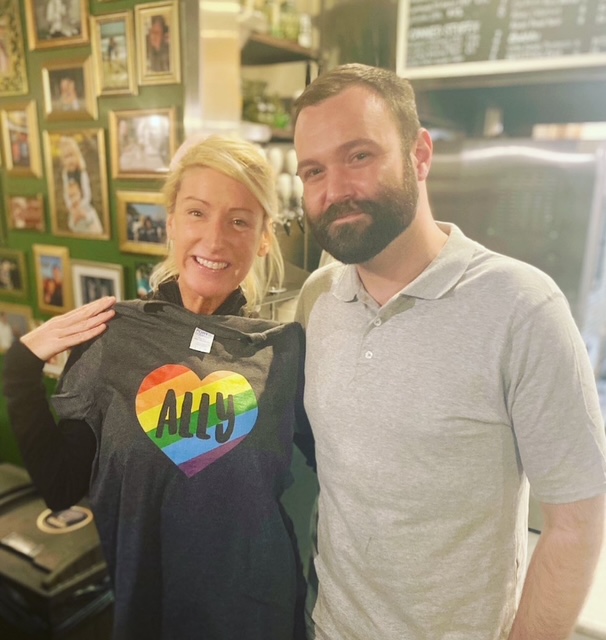
Visibility, she says, is a crucial part of allyship. “Allies should be out there seconding and reiterating the communication,” ensuring that queer voices are heard, especially when they might otherwise be dismissed. It’s about amplifying, not overshadowing.
At the end of our conversation, Emily offers a single word to summarize her outlook: The WORD is Miraculous. Not to describe allyship alone, but to describe the shared experience of being human. “How miraculous is it to be in this universe, on this earth, at the very same time as each other,” she reflects, “regardless of how anyone identifies or who they love, so long as they’re not causing harm? We are all so much more alike than we think. And it’s a fine time for everyone to start acting like it.”
In her restaurants, in her community work, and in her everyday interactions, Emily holds that truth close—and invites everyone else to do the same.