

Guerrera: Carolina Ramos, Motherhood, Movement, and the Power of Being Fully Chicana and Lesbian
By Cesar A Reyes
Carolina Ramos is San Diego born and raised, a hometown girl shaped by a traditional Mexican Catholic familia where faith ran deep and expectations ran deeper. She grew up hearing what many Chicanas of her generation heard: “Homosexuality is a gringo thing.” It was spoken casually, almost as fact. And like so many messages delivered at the dinner table or from the pulpit, it settled in her bones.
“Being able to embrace all of me, including my culture and my orientation, was a journey,” Carolina says.
When she came out, the stakes were immediate and terrifying. “When I came out my mom and ex threatened to take my son away.” Just like that, her identity became something weaponized against her. She wasn’t debating theory. She was fighting for her child.
She started searching for help — contacting organizations and reaching out to anyone she thought might guide her. “I started searching for help at the Center, calling attorneys, finding no support.” The silence on the other end of those calls was loud. There were no clear answers, no roadmap for a lesbian mother trying to protect her family.
So she did what many women before her have done when institutions failed them—she found other women like her.
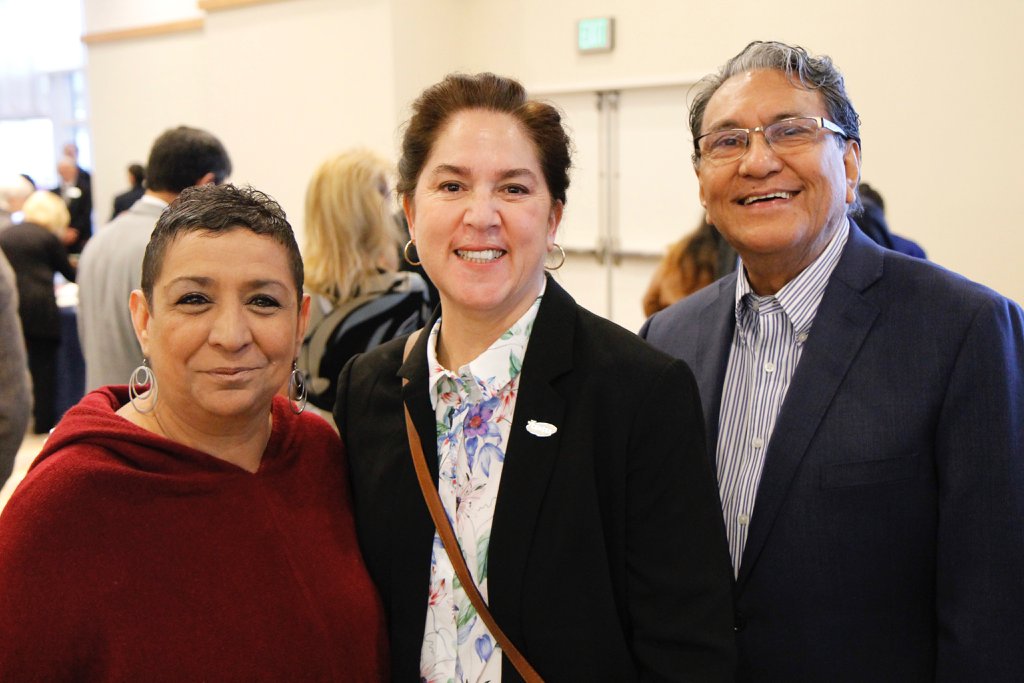
“I met other lesbians that were parents and we started Moms and Me.” It began informally. Conversations. Shared fears. Legal advice scribbled on notepads. Childcare swaps. Crying and laughing in the same afternoon. It wasn’t polished or funded. It was necessary.
Years later, fathers expressed interest in joining. “We had an interest from dads so we renamed it Moms and Me & Dads Too.” The shift was simple but powerful. The circle widened. The need was bigger than any one family.
Through those gatherings, Carolina began noticing something else. Their children were walking into schools carrying the weight of adult prejudice. “Because of that I started to see a need to advocate in the schools for our children and it just grew from there.” One fight led to another. Protecting her son turned into protecting classrooms full of kids with queer parents. Activism, for Carolina, wasn’t a strategy. It was momentum born from love.
Still, the deeper internal work was happening alongside the external battles. Growing up, she had been taught that queerness didn’t belong in her culture. That being Mexican and being lesbian were somehow incompatible. “Especially because the messages I heard growing up was that homosexuality was a gringo thing.”
Travel changed that. Community changed that. Meeting other Chicanas like her changed that. “I learned in my travels that it was ok to be both Chicana and a lesbian.” That realization wasn’t just intellectual—it was freeing. It meant she didn’t have to split herself in two. She could bring her whole self into every room: Spanish and pride. Virgen de Guadalupe and rainbow flag. Familia and chosen family.
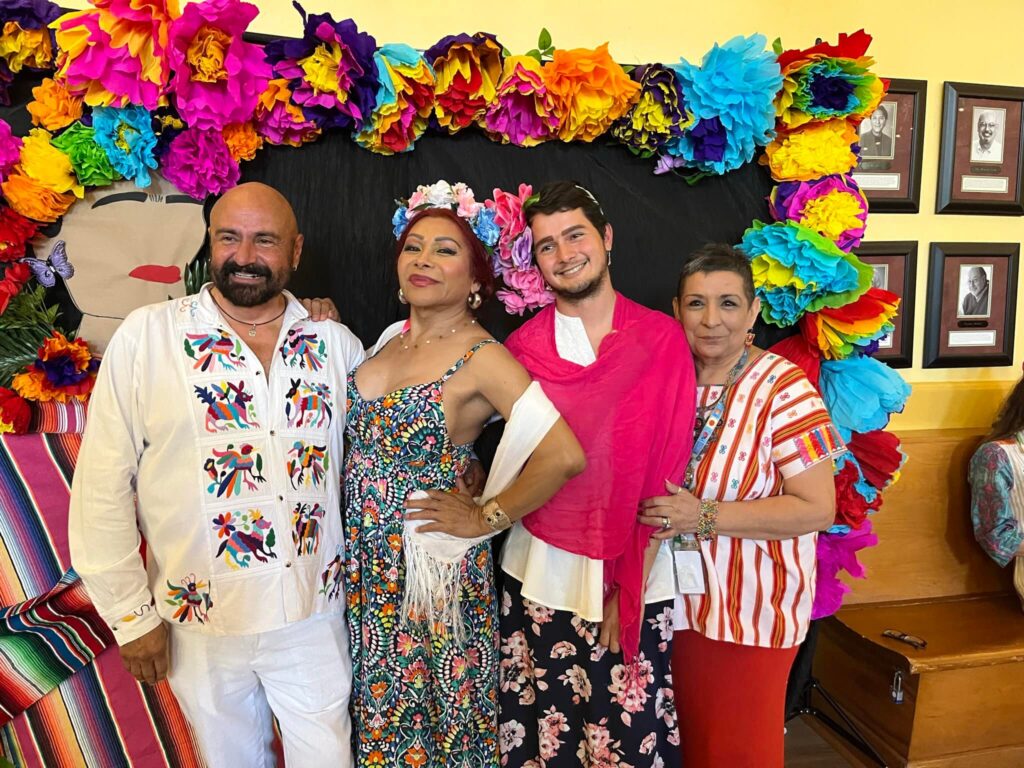
That fullness became central to her work with Latin@x Services at The San Diego LGBT Community Center. When Latin@x Services launched in 2004, it wasn’t just a program—it was a promise. A recognition that culture matters. Language matters. Representation matters.
For many community members, Carolina’s office became a refuge.
One person remembers walking in pregnant and uncertain about her future. What she found was warmth. Open arms. A place to sit. A place to breathe. Latin@x Services became “the first place in San Diego where I truly felt at home,” she shared. That feeling came from Carolina’s presence—nurturing but firm, gentle but fiercely protective.
Carolina carries that duality naturally: soft voice, strong spine.
When asked about Lambda Archives of San Diego’s new educational series, The Dykes and Their Friends, her enthusiasm is immediate. “I LOVE the idea and concept of this series,” she says, smiling. The word “dykes” doesn’t make her flinch. It makes her proud. “I think we don’t do enough storytelling of DYKES and our friends.”
For her, storytelling isn’t nostalgia. It’s survival. “Sharing life situations of our reality is keeping our community connected and alive.” Without stories, people disappear. Without stories, younger generations grow up thinking they are the first, or worse—the only.
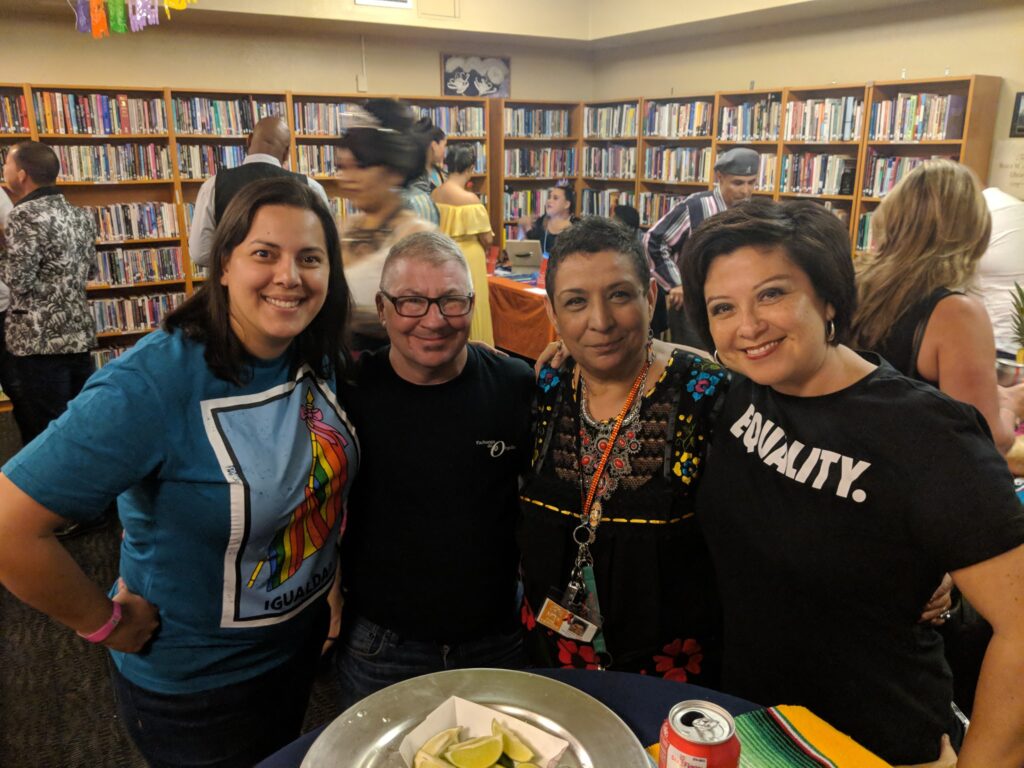
Carolina knows what it feels like to believe you are alone.
That’s why, when asked to choose a WORD that represents her work, she doesn’t hesitate: “Guerrera.” Warrior.
Not the loud, chest-pounding kind. The steady kind. The kind who makes phone call after phone call when her child is threatened. The kind who builds support groups when none exist. The kind who walks into school offices and demands better. The kind who creates space so others can exhale.
Looking back at 20 years of Latin@x Services, the milestone feels personal. It’s proof that what began as survival grew into legacy. That the small office with open arms helped anchor generations of Latin@x LGBTQ families in San Diego.
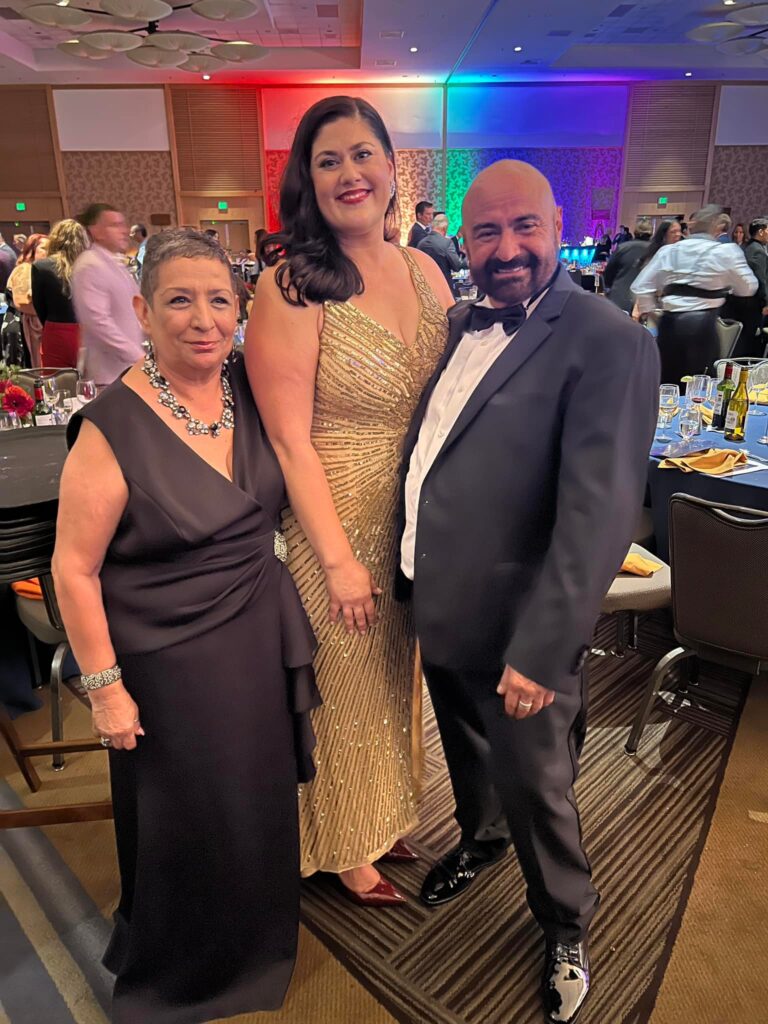
Carolina Ramos didn’t set out to become an activist. “Well it basically happened out of need,” she says simply. That’s how it started. Need. Fear. Love.
Then when love refuses to back down, it becomes movement.
She is Chicana. She is lesbian. She is mother. She is guerrera.
And because she chose to fight, so many others didn’t have to fight alone.