
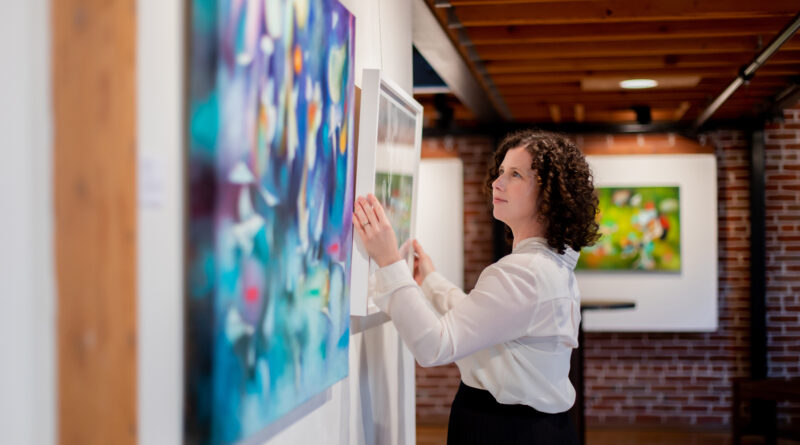
Why Starve? San Diego’s Art Culture is Thriving
By Patric Stillman
For decades, two ideas have lingered stubbornly in conversations about the arts. The first is that the “starving artist” is an unavoidable reality, and second is that San Diego lacks meaningful opportunities for visual artists. Both are well-worn tropes. Both deserve to be retired.
Today, San Diego offers a broader range of creative pathways than ever before. While no single exhibition, grant or gallery placement will define an artist’s career, the accumulation of opportunities across disciplines, venues, and platforms create momentum. Being an artist is still highly competitive but San Diego has a foundation that can be highly rewarding for visual artists.
The myth of the starving artist is rooted in the idea that success arrives through one defining breakthrough. In reality, artists including actors, writers, and musicians build visibility through repetition, adaptability and presence across multiple arenas. Murals, workshops, teaching, design work, wine-and-sip events, residencies, art fairs and gallery exhibitions are not distractions from a “serious” practice; they are often what sustains it.
San Diego’s arts ecosystem reflects this reality. It is not a single pipeline but a network. Artists move between commercial galleries, community organizations, public art projects, festivals and independent initiatives. Momentum grows through overlap, not isolation.
“Artists can’t survive in isolation. Most of the opportunities I’ve received have come through direct referrals or personal connections – someone who knew my work, believed in it, and brought me into the room. Momentum grows through relationships, and asking for support isn’t a weakness. It’s a form of leadership and trust,” said Stefanie Bales of Stefanie Bales Fine Art, recently named to the 2026 San Diego Tourism Authority Accelerator cohort.
A persistent misconception about San Diego is that opportunity is scarce. What is often overlooked is where opportunity lives.
Much of the city’s visual arts activity operates beyond the major institutions and outside the nonprofit funding spotlight. Independent galleries, working studios, artist alliances and privately funded programs do the quiet, consistent work of building markets and audiences. These efforts rarely make headlines, but they form the backbone of a functioning creative economy.
Commercial and independent galleries across the county continue to represent, promote and sell work by regional artists. Professional development programs prepare artists for real-world engagement. Working studio environments place artists directly in front of the public. Art fairs and festivals connect artists with collectors who may never step into a traditional gallery.
This infrastructure does not promise overnight success. It does, however, offer continuity and continuity is what careers are built on.
Increasingly, successful artists are those willing to think expansively about where their work can live. Fine art doesn’t have to compete with commercial creative work like prints, cards or books. Many thriving artists do both. Local artists often build resilient careers by moving fluidly between different forms of production while maintaining a clear creative voice.
“From the beginning, I knew I didn’t want this to be just a hobby. I wanted to make it my work,” said Sara Wilczynska, painter, illustrator and founder of Swil Arts. “I started learning how to paint and how to build an art business at the same time. I realized early on that the traditional fine art path isn’t the only way to sustain a creative life, so I built my studio with multiple paths in mind.”
Swil Arts was named to the 2026 San Diego Tourism Authority Accelerator cohort, reflecting Wilczynska’s growth as an artist and entrepreneur.
This approach is not unique to visual art. Writers publish across platforms. Actors balance stage, screen and commercial work. Musicians teach, perform, record and collaborate. Visibility comes from being seen repeatedly, in different contexts, by different audiences.
San Diego supports this model particularly well. Its mix of tourism, neighborhood-based arts districts, educational institutions and community organizations creates multiple points of entry for creative work.
Some artists take this one step further by actively shaping the conditions around them by organizing projects, advocating for murals, collaborating with nonprofits or activating underused spaces. These efforts expand not only individual careers but the cultural landscape itself.
“I think always showing up as an artist wherever you go is most important. That’s the business,” said queer Chicana painter, muralist, and DJ Betty Bangs. “Always show up as a creative person. Canvases are everywhere. Keep creating.”
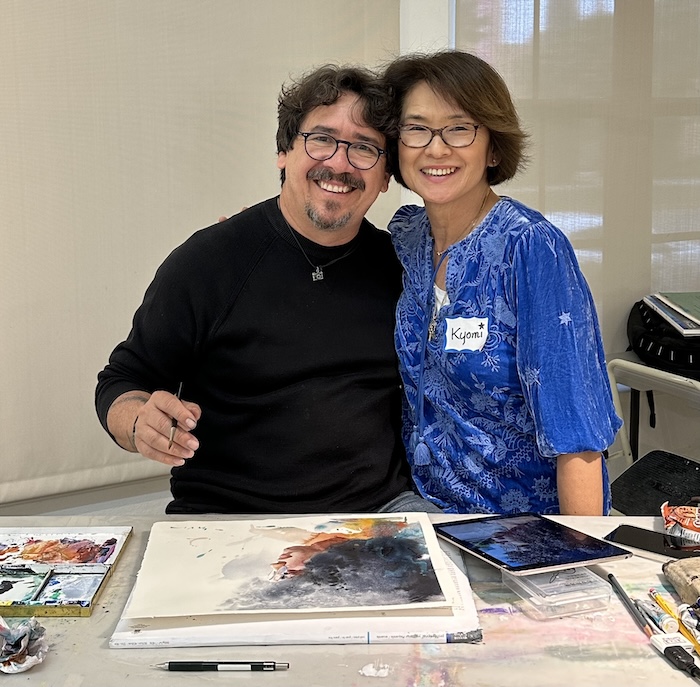
This kind of initiative underscores an important truth that opportunity is not something artists passively receive. It is something they help generate.
San Diego’s arts ecosystem functions best when artists participate fully by not only by submitting work but by attending exhibitions, supporting peers, sharing resources and investing in the spaces that support them. Cultural vitality is cumulative. When artists show up consistently for one another, visibility increases for everyone.
“Art scenes are built by people with skin in the game,” said abstract artist Redin Winter, co-host of Beyond Gallery Walls podcast. “If the scene doesn’t exist, build it. Connecting with other artists counters isolation and creates a living art culture.”
The idea that San Diego “doesn’t have an art scene” often stems from disengagement rather than absence. The scene is here. It is active. And it requires participation to remain so.
San Diego’s arts culture is not stalled; it is evolving. The pathways available today across galleries, studios, festivals, residencies and public projects offer artists more agency than ever before. While no market is without challenges, the notion that artists must leave San Diego to succeed is increasingly out of step with reality.
Opportunity exists here not as a single prize, but as a practice. Artists who engage consistently, creatively and collaboratively are not starving. They are working.
San Diego’s arts ecosystem is not defined by what it lacks, but by how it functions. It operates through networks rather than hierarchies and through participation rather than permission. The conditions for creative work exist in abundance, even if they look different than they once did. For artists prepared to engage across disciplines, communities, and platforms, the path forward is not narrow. It is wide open.
San Diego Artist Opportunities at a Glance
A curated snapshot of the many ways visual artists engage, grow and sustain creative careers locally. Upcoming submission deadlines are noted in parenthesis.
Find Opportunities:
- San Diego Visual Arts Network (SDVAN)
- San Diego Art Directory
Artist Alliances & Community - Oceanside Museum of Art Artist Alliance
- San Diego Museum of Art Artist Guild: The Art of Now (May 8)
- San Diego Watercolor Society: Paradise on Earth (March 18)
Juried Calls for Art:
- Escondido Arts Association: Mayor’s Art Competition (April 4)
- Art Scene West: Art for the Ages (May 16)
Professional Development:
- Sparks Gallery: Gateway to Galleries (March 9–15)
- Woodward Contemporary: Professional Art Skills Workshops
- Mission Fed ArtWalk: Business of Art Scholarship
Working Studios:
- The Studio Door: Working Artist Studios
- Space 4 Art: Live/Work & Studio Spaces
Residencies:
- Bread & Salt
- Institute of Contemporary Art San Diego
Art Fairs & Festivals
- ArtWalk (Little Italy / Liberty Station / Carlsbad)
- La Jolla Art & Wine Festival
- San Diego County Fair — Fine Art Exhibition (April 27)
Commercial & Independent Galleries
- Madison Gallery
- Distinction Gallery
- Thumbprint Gallery
- The FRONT Arte Cultura
College-Based Art Spaces
- Mesa College Art Gallery
- SDSU Gallery Program
Public Art:
- San Diego International Airport Art Program
- City of San Diego Public Art Program
Commissions and Work-for-Hire
- Murals and site-specific commissions
- Workshops, demonstrations and private teaching
- Illustration, design and collaborative projects
LGBTQ+ Art Resources:
PROUD+ 2026: The Studio Door (May 9)
Art of Pride: San Diego Pride Festival Art Village